State: OR

May 13, 2024

New Oregon Department of Fish and Wildlife Director Announced

Why It Matters: After serving as Director of the Oregon Department of Fish and Wildlife (ODFW) for ten years, Curt Melcher retired from his role with the department. The search for the next Director started in January 2024 immediately following Director Melcher’s announcement. The ODFW Commission announced finalists on May 3, 2024. Both candidates were…
April 29, 2024

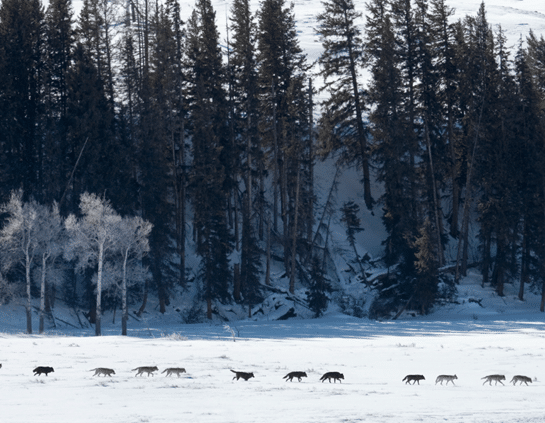
Wolf Issues Sweep Through the Northwest

Why It Matters: As population studies wrap-up, commissions convene, and court decisions are announced, management and regulatory conversations begin anew. While wolves are only one species among thousands, the decisions being made with wolf management have ripple effects throughout wildlife conservation as well as hunting and trapping opportunities. The Congressional Sportsmen’s Foundation (CSF) is working…

February 12, 2024

Oregon Sportsmen’s Caucus Holds First Meeting of the 2024 Legislative Session

Why It Matters: With the success of the Congressional Sportsmen’s Caucus in Washington D.C., the Congressional Sportsmen’s Foundation (CSF) next set out to create a network of state legislative sportsmen’s caucuses; and, in 2004, the National Assembly of Sportsmen’s Caucuses (NASC) was launched. Currently, there are approximately 2,000 state legislators who are members of individual…

November 16, 2023

Considering Recreational Angling Access in Transportation Projects

Opportunities to expand angling access throughout the country have become increasingly limited in recent years due to increases in private ownership along waterways and attendant riparian rights limiting new access construction. State authorities often have the opportunity to expand fresh water angling access through the establishment of access points when state highway transportation departments are…

November 16, 2023

Federal Land Hunting & Angling Access

Many sportsmen and women depend on federal lands managed by agencies such as the U.S. Forest Service, Bureau of Land Management and U.S. Fish and Wildlife Service for access to activities like hunting, fishing and recreational shooting. As these agencies develop strategies to manage federal lands, it is critical for those who support these activities…

November 16, 2023

Conservation Sales Tax

In addition to the American System of Conservation Funding, some states have begun to seek alternative methods of funding for their fish and wildlife agencies. A conservation sales tax on all taxable goods is one such mechanism that states might consider implementing. This excise tax is primarily applied to sporting goods such as firearms and…

November 16, 2023

Dedicated Lottery Funds for Conservation

Over the last few decades, rising costs for natural resource management and increased public utilization of these resources has led to the need for additional methods of funding for conservation. Dedicating lottery proceeds to funding conservation can assist with efforts such as increasing access to public lands, habitat and endangered species conservation, wildlife education, watershed…

November 16, 2023

Federal Land Habitat Management

Properly managed wildlife habitat is essential for supporting sustainable and healthy wildlife populations. Well-managed lands containvarious successional stages that provide a diversity of habitats capable of supporting a diversity of wildlife. On federal lands, however, young forests and other early seral habitats are often underrepresented. The most efficient method to improve wildlife habitat is through…

November 16, 2023

Increased Penalties for Poaching and Incentivizing the Reporting of Fish and Wildlife Violations

Poaching stands as one of the greatest threats to both the social acceptance of hunting and professional wildlife management. By definition, poaching runs afoul of laws governing the harvesting of wildlife, thus upending the scientifically-developed regulations put in place by state wildlife managers. Further, anti-hunting communities have aimed to equate poaching with hunting in efforts…

November 16, 2023

Interstate Wildlife Violators Compact

With the increased sophistication of poachers and other wildlife violators, there is a need for increased levels of coordination and information sharing on these individuals between state fish and wildlife agencies. The Interstate Wildlife Violators Compact (IWVC) creates the mechanism allowing for this coordination. The availability of this information helps stop poachers and other violators…