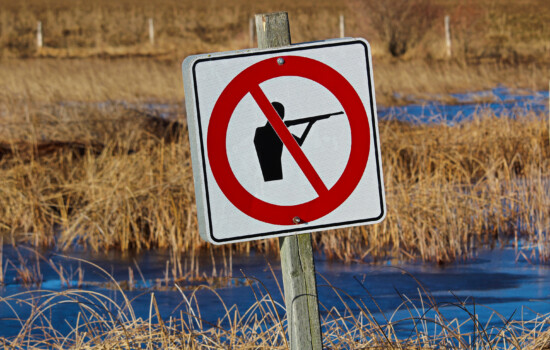
Why It Matters: Access to America’s public lands and waters are key to passing along our time-honored traditions to the next generation. After all, it is the hunters and anglers of tomorrow that will shoulder the responsibility of funding conservation through the “user pays – public benefits” structure of the American System of Conservation Funding (ASCF). Through access restrictions, like Sunday hunting prohibitions, the ability of sportsmen and women to access our valued public trust resources are diminished.
Highlights:
- North Carolina and South Carolina remain the only two Southeastern states that still have public land Sunday hunting prohibitions in place.
- Oftentimes, proponents of Sunday hunting restrictions cite the allowance of compensatory hunting days for waterfowl to justify keeping existing Sunday hunting restrictions in place.
While many hunters think of access as a physical barrier, in a select few states, access is limited by the days of the week you can hunt (i.e., “temporal access”). Sunday hunting restrictions are puritanical blue laws that were originally passed to encourage church attendance. Now, these same restrictions are a major barrier to access in a handful of states in the eastern U.S., and specifically North Carolina and South Carolina in the Southeast.
You will hear different justifications for keeping Sunday hunting restrictions in place. From allowing non-hunters to enjoy public hunting lands without “disturbance” to the loss of compensatory hunting days if Sunday hunting restrictions on migratory birds were lifted. Regardless of the reason, there is no justification based in science to keep hunters from enjoying a resource they are contributing to directly through the purchase of hunting licenses from their respective state fish and wildlife agency, especially as non-hunting users often do not pay into conservation funding in the same way as hunters do, yet in some instances, they enjoy exclusive access (Sundays) to public lands bought and paid for with hunters’ dollars.
Since migratory birds do not recognize international and state boundaries, migratory bird hunting regulations are carefully managed through the U.S. Fish and Wildlife Service (USFWS). The USFWS sets the federal framework for how long seasons can be (typically 60 days in the Atlantic Flyway, for example). States then have the option to set their seasons as long as they are within the federal framework. So, how would lifting the prohibition on migratory bird Sunday hunting impact total season length? The short answer is that it would not.
Proponents of migratory bird Sunday hunting restrictions often cite that by lifting Sunday hunting bans, the state would lose its compensatory hunting days allotted to them by the USFWS. Compensatory hunting days are allotted to states that have a statutory ban on migratory bird Sunday hunting, which allows these lost days (all Sundays) to be made up, allowing the state to reach its total number of hunting days as set by the USFWS.
While it is true that if migratory bird Sunday hunting prohibitions were lifted, the state would no longer be eligible to receive compensatory hunting days, the total season length (days that hunters could legally hunt migratory birds) would not change. Thus, instead of having to make up the missed Sundays, hunters would simply be able to hunt on Sundays and achieve their total number of hunting days like nearly every other state does already. In short, while the season would technically be shorter on the calendar with the loss of compensatory hunting days, the total number of hunting days would remain the same. Additionally, shifting available hunting opportunities to Sundays as opposed to a weekday, where many hunters have work or school obligations, would allow hunters to more readily enjoy our time-honored traditions, thus supporting the working-class hunter.
What is the takeaway here? Keep it simple. Support efforts, and organizations like the Congressional Sportsmen’s Foundation (CSF), to repeal Sunday hunting prohibitions in the few places they remain. Lifting outdated Sunday hunting restrictions will provide equitable public access and conserve our time-honored traditions for generations to come.
Related Policy