
Why It Matters: To say things in Augusta have been contentious over the ’25-’26 legislative session would be putting it mildly. Deep-rooted divides, partisan axe-grinding, and all-out obstructionism made advocacy efforts feel like a one-day hike up Everest. Despite the political climate in the state house, several wins were secured for sportsmen and women, but, but other important legislation unfortunately fell short. The Congressional Sportsmen’s Foundation (CSF) and the Maine Legislative Sportsmen’s Caucus (Caucus) were able to deliver wins for the sporting-conservation community despite the suboptimal political environment.
Highlights:
- On April 15, 2026, Maine’s biennium session came to a close, marking the end of an extremely divided legislative body.
- Most recently, and as previously reported, Maine’s citizens’ Right to Hunt, Fish, and Trap was strengthened with the signing of Public Law No. 642.
- LD 1230, which sought to repeal Maine’s 72-hour waiting period on firearm purchases, failed to move out of the Senate and was dead earlier in the month.
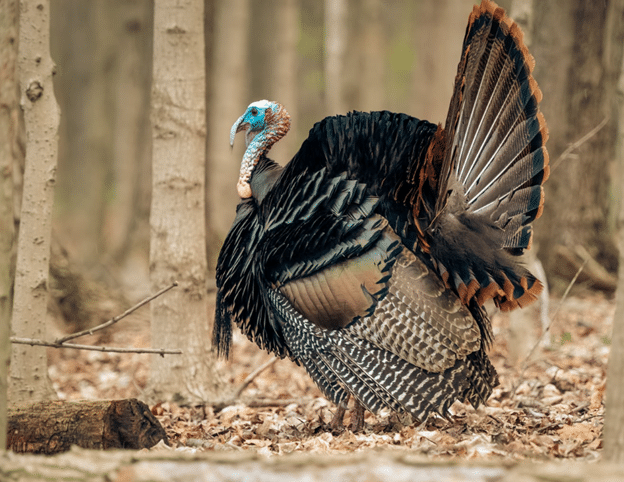
- Efforts to bring about changes to wild turkey daily bag limits were thwarted in the first half of the session as LD 205 was killed with its attempt to increase the daily bag limit to that of ruffed grouse.
- LD 1364 also failed in the first half, which would have started Maine down the path of banning traditional hunting ammunition.
As reported previously, Maine’s legislative highlight for the two-year session came just weeks ago with the strengthening of the term “harvest” in the “Right to Food” amendment, via LD 1343, which updated the definition of harvest in statute to include trapping and fishing and supported the 2021 amendment by codifying, in statute, citizens’ right to hunt, fish, and trap.
Unfortunately, efforts to repeal the 72-hour waiting period on firearm purchases failed to pass. The law introduced and passed in 2024 was immediately met with efforts to repeal it at the beginning of the biennium, which carried over into the second half, where it ultimately failed. These waiting periods create a uniquely biased hurdle on the hunting and sport shooting communities – a barrier levied on no other outdoor user experience. Maine’s sportsmen and women are the backbone of the funding structure for conservation efforts that benefit fish, wildlife, and their habitat, as well as the citizenry at large, and have driven in-state sales that directly contribute to the American System of Conservation Funding.
The absurdity captured in LD 205, whereby the daily bag limit on wild turkey would have matched that of Maine’s iconic ruffed grouse, was stopped in its tracks early on despite biased efforts from some citizens who have wrongfully condemned the wild turkey for their agricultural woes based on unfounded citizen science conclusions. CSF submitted testimony in strong opposition to the bill highlighting the importance of wildlife managers being able to manage turkey populations based on science and not backyard biology coupled with villainization of the bird. With the defeat of LD 205 wildlife managers will retain their authority to continue responsibly managing species based on science rather than emotion.
Finally, CSF and the Maine Legislative Sportsmen’s Caucus saw through the attempts to start the process of working towards traditional ammunition bans by way of LD 1364 which would have authorized a study on the impacts and risks of lead ammunition, the first step to banning traditional ammunition. CSF submitted written testimony in opposition to the bill.
CSF appreciates collaboration with the Legislative Sportsmen’s Caucus, its Co-Chairs, and our partners to secure wins on behalf of Maine’s sporting community and longstanding sporting traditions. With the coming elections later this year, Maine will see a new Governor elected as well as new Co-Chairs in the Caucus. CSF would like to thank Governors Sportsmen’s Caucus member Janet Mills for her time on the GSC and her pro-sporting contributions. Additionally, we would like to thank Senator Trey Stewart for his years of support to the Caucus as the Senate Co-Chair and Rep. Tiffany Roberts, Co-Chair in the House, for her support of Maine’s sporting community.