
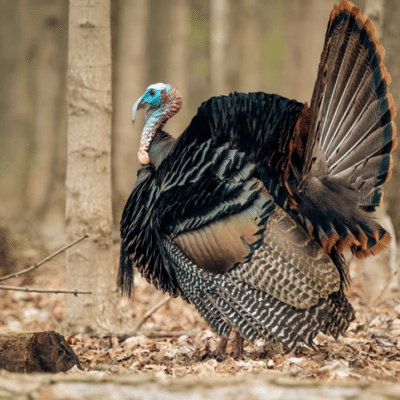
What if the gobbler you chased isn’t what you think it is?
Turkey hunters pride themselves on knowing the bird, but new science is challenging long-held assumptions about wild turkey populations. This conversation dives deep into the Wild Turkey DNA Project and what it’s uncovering about subspecies, hybridization, and the future of turkey hunting across North America.
As traveling turkey hunting continues to rise, so does pressure on birds and the landscapes they inhabit. But the bigger story lies beneath the feathers. Decades of trap-and-transfer restoration efforts mixed subspecies in ways that are only now being understood through genetic testing. What looks like a classic Eastern or Rio Grande gobbler in the field may actually be a hybrid with a far more complex lineage.
The discussion also explores odd plumage birds, inbreeding, and what isolated flocks could mean for long-term population health. From habitat fragmentation to limited gene flow, the implications stretch far beyond one season or one state. Hunters will gain insight into how science, conservation policy, and boots-on-the-ground habitat management all connect.
This is a look at wild turkeys through a sharper lens. The kind of knowledge that makes you rethink every gobble you hear this spring.