
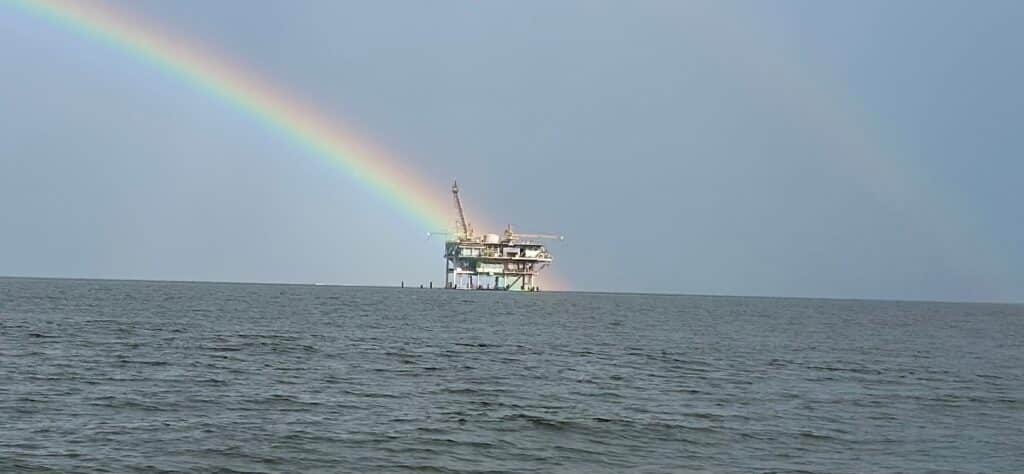
Why It Matters: Prior to 1984, decommissioning an offshore platform meant one thing – total removal of the structure and returning the area to pre-construction conditions, which is often relatively flat, soft-bottom with limited natural hard substrate in the Gulf of America (Gulf). Fortunately, the National Fishing Enhancement Act provided a framework for an alternative pathway through a Rigs-to-Reefs program to save the abundant marine life that call the manmade structure home. Despite the Congressional Sportsmen’s Foundation’s (CSF) work on the Marine Fisheries Habitat Protection Act, there are clearly some misconceptions about what the program does or does not do.
Highlights
- Rigs-to-Reefs does not mean simply abandoning an offshore platform as is. The production deck and equipment are removed, any hazardous materials are addressed, and associated wells are permanently plugged and abandoned under applicable requirements.
- The state’s liability applies to the accepted reef structure. The operator’s separate responsibility for associated wells remains; reefing does not transfer the long-term well responsibility to the state.
- Operators share a portion of their decommissioning cost savings with participating states, helping support artificial reef and other habitat programs, fisheries management, and research, among other programs.
Offshore oil and gas platforms often become thriving marine habitats during their working life. Their submerged structures provide hard surfaces where corals, sponges, and other organisms can attach, as well as shelter for juvenile reef fish and forage species. In areas with limited natural hard-bottom habitat, these structures create important meccas for anglers, divers, and marine life.
When a platform reaches the end of its useful life, Rigs-to-Reefs offers a way to preserve much of that established habitat. It does not mean leaving an operating platform intact as if it were still in production. The production deck and equipment are removed, hazardous materials are addressed, and the proposal must meet strict engineering, environmental, navigational, and permitting requirements. Depending on the approved method, the platform’s submerged structure, or a portion of it, may be toppled, towed to a designated reef site, or reefed-in-place with the top removed at a safe navigational depth below the waterline. The reef-in-place method is by far the preferred method for anglers and divers as the marine ecosystem and biodiversity that took decades to establish are left largely undisturbed.
From a well perspective, they are handled separately from the structure being reefed. Associated wells must be permanently plugged and abandoned under applicable requirements whether the platform is reefed or taken ashore for disposal. There is no advantage to the total removal of the structure with regard to the well. The state’s acceptance of title and liability applies to the approved reef structure only. If a plugged well later leaks, that well responsibility remains with the responsible oil and gas operator, not the state or the American public.
Importantly, the benefits of the Rigs-to-Reefs program extend well beyond the marine community inhabiting the structures. Because reefing may cost an operator less than removing, transporting, and disposing of a platform onshore, the operator shares a portion of those savings with the state that accepts the structure. Under the existing Gulf program, that contribution is commonly about half of the savings, and those funds help support the mission of the state natural resource agency, from artificial reef programs, fisheries management, coastal restoration, research, to a host of other mission-specific responsibilities. On top of that, the remaining platforms off our coasts offer billions of dollars’ worth (literally) of artificial habitat state agencies cannot afford to build themselves.
The Marine Fisheries Habitat Protection Act would build on this successful program by establishing a clearer process for evaluating and reefing eligible offshore structures in place. With the appropriate safeguards specified in the bill, along with continued state participation, the legislation will help keep valuable habitat in the water, sustain fishing and diving opportunities, and direct a share of decommissioning savings back into conservation. CSF remains committed to leading the legislative effort to get the Marine Fisheries Habitat Protection Act across the finish line. By advancing a responsible path for Rigs-to-Reefs, CSF will continue working to protect critical marine habitat, strengthen conservation efforts, and preserve valuable fishing and diving opportunities for generations to come.