
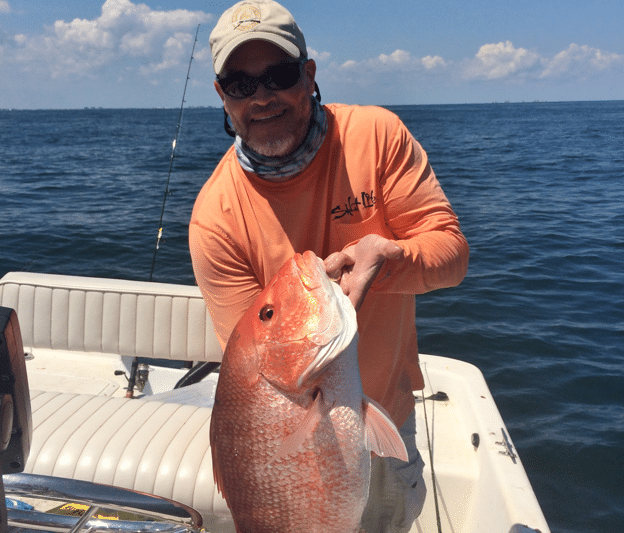
Why It Matters: Healthy fish populations depend on healthy aquatic habitats. The National Fish Habitat Partnership (NFHP) has set a renewed national direction for protecting, restoring, and enhancing those habitats, while its network of regional partnerships continues turning shared goals into local conservation work.
Highlights:
- NFHP released the third edition of the National Fish Habitat Action Plan in August, providing a strategic roadmap for the partnership’s work.
- The Board also recently adopted National Conservation Priorities for 2026–2031, focused on clean water, connected watersheds, and healthy, productive fish habitats.
- The Congressional Sportsmen’s Foundation (CSF) Senior Director of Fisheries Policy, Chris Horton, was re-elected to the National Fish Habitat Board on November 4 for a second term.
Last week, Chris Horton, Senior Director of Fisheries Policy for CSF, was re-elected to a second term on the National Fish Habitat Partnership Board. The re-election comes as NFHP moves forward with an updated national vision for conserving fish habitat that builds on twenty years of success.
In August, NFHP released the third edition of the National Fish Habitat Action Plan, updating the partnership’s national roadmap for the next five years. It calls for coordinated, science-based work to protect healthy aquatic systems, prevent further habitat degradation, reverse declines in habitat quality and quantity, and improve habitats that support a diversity of aquatic species and enhance angling opportunities. The plan also emphasizes strengthening the network of Fish Habitat Partnerships and aligning national goals with locally driven conservation projects.
In October, the Board adopted National Conservation Priorities for 2026–2031 to help guide that work and focus future investments. The priorities center on conserving clean and abundant water, restoring connections among rivers and watersheds, and protecting productive habitats across freshwater, coastal, and marine environments. Examples include improving water quality and streamflow, reconnecting fragmented fish habitat, and conserving estuaries, nearshore nurseries, reefs, lakes, reservoirs, and riparian areas.
The plan and priorities provide a shared framework for NFHP’s 20 Fish Habitat Partnerships while preserving their ability to address local and regional needs. Since 2006, the partnership has supported more than 1,800 fish habitat projects in all 50 states – work that benefits fish, anglers, and local communities.