
Why It Matters: The bipartisan National Wildlife Refuge Habitat Partnership Act advances longstanding Congressional Sportsmen’s Foundation (CSF) priorities by expanding conservation partnerships and strengthening active habitat management across the National Wildlife Refuge System (NWRS). The legislation would help refuge managers address critical habitat needs, benefiting fish and wildlife while supporting quality hunting and fishing opportunities.
Highlights:
- On November 10, Congressional Sportsmen’s Caucus (CSC) Co-Chair Senator John Boozman (AR) and CSC Member Senator Alex Padilla (CA) introduced the bipartisan National Wildlife Refuge Habitat Partnership Act (S. 5711).
- The legislation would provide U.S. Fish and Wildlife Service (FWS) with explicit authority to enter into contracts or agreements with state, local, tribal, nonprofit, and private-sector partners to carry out habitat management activities across the NWRS.
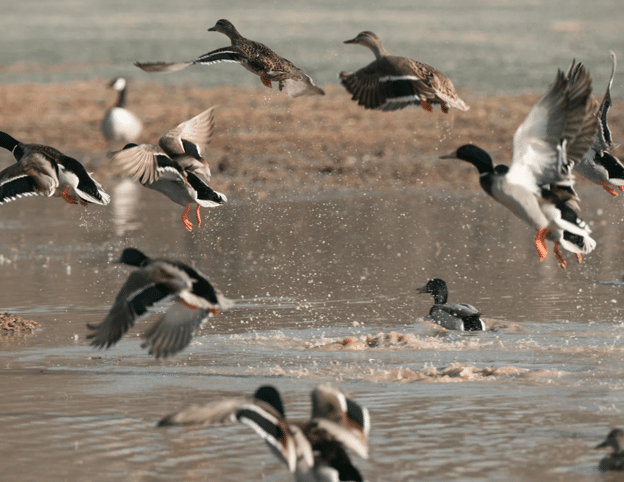
- Authorized activities include invasive species control, prescribed burning, vegetation management, planting and seeding, and the operation of water delivery and control structures. The bill also supports waterfowl recruitment across breeding grounds through activities such as managing water levels and vegetation to maintain suitable nesting and brood-rearing habitat.
On November 10, Congressional Sportsmen’s Caucus (CSC) Co-Chair Senator John Boozman (AR) and CSC Member Senator Alex Padilla (CA) introduced the bipartisan National Wildlife Refuge Habitat Partnership Act (S. 5711) to address longstanding habitat management challenges across the National Wildlife Refuge System. Many refuges require active, ongoing management to maintain healthy habitats for fish, waterfowl, and other wildlife, but limited staffing, resources, and equipment can constrain necessary conservation activities. By allowing the U.S. Fish and Wildlife Service (FWS) to leverage outside expertise, personnel, and equipment, the legislation would help expand the capacity of refuge managers to carry out habitat management activities that support the conservation purposes of individual refuges.
Importantly, activities conducted through these partnerships would remain under the direction of refuge staff and must be consistent with each refuge’s Comprehensive Conservation Plan or other approved management plan, its established purposes, and the broader mission of the NWRS. The legislation would also allow FWS to retain certain revenues generated through these agreements for habitat management and other refuge needs, supplementing existing appropriations rather than replacing them.
CSF thanks Senators Boozman and Padilla for leading this bipartisan effort to strengthen refuge habitat management. Strengthening collaboration between FWS and conservation partners would help expand on-the-ground conservation capacity, address critical habitat needs, and support quality hunting and fishing opportunities. The legislation recognizes the importance of active, science-based habitat management while ensuring that refuge professionals maintain responsibility for conservation decisions that advance the purposes of the National Wildlife Refuge System.