
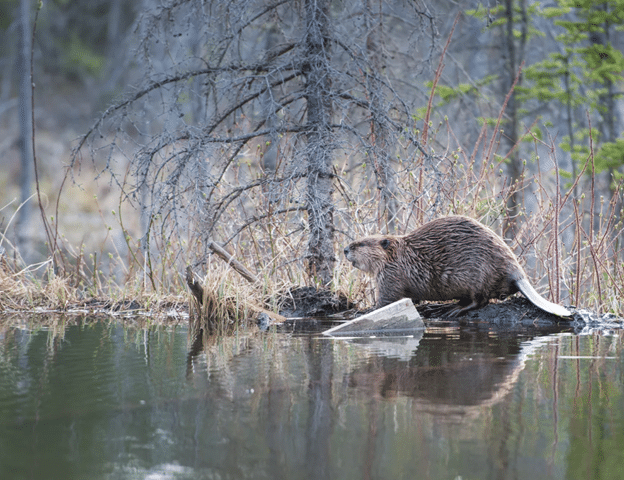
Why It Matters: Attempts to manage wildlife through the legislation, like Colorado House Bill 1323 (HB 1323), while perhaps well intentioned, rarely benefit sportspeople or follow best available science. The North American Model of Wildlife Conservation (NAMWC) is a set of seven principles that codify the United States’ approach to wildlife management, where wildlife is managed as public trust resources for the benefit of all citizens, and the system is funded through the “user-pays, public-benefits” American System of Conservation Funding (ASCF). One core principle of the NAMWC is that wildlife policy is formulated through the use of best available science, which is why state fish and wildlife agencies, like Colorado Parks and Wildlife (CPW), are given a wide deference to professionally manage our wildlife for the benefit of all members of the public, even though the vast majority of CPW funding comes from sportspeople.
Highlights:
- CO HB 1323, Wildfire Resiliency Prohibiting Taking of Beavers, was a bill that would have banned all public land harvests of beavers for recreational or commercial purposes.
- HB 1323 was heard in the Colorado House Agriculture, Water, & Natural Resource committee on March 23, 2026, where it failed to pass Committee on a bipartisan 10-3 votes, with strong opposition from several Colorado Legislative Sportsmen’s Caucus members.
- The Congressional Sportsmen’s Foundation (CSF) also opposed the bill in Committee, along with members of the Colorado Wildlife Conservation Project (CWCP), and many individual Colorado Sportspeople.
Colorado sportspeople are breathing a sigh of relief after HB 1323, Wildfire Resiliency Prohibiting Taking of Beavers, died in its first committee hearing two weeks ago. This bill proposed to ban all public land harvests of beavers for recreational or commercial purposes, under the premise that beavers played a significant role in wildfire mitigation. While correctly recognizing the ecological significance of beavers, this concept fell significantly short of the science necessary to support a sweeping change like this and instead fell into direct conflict with CPW’s recently developed Beaver Conservation and Management Strategy (BCMS).
The reality is that government agencies with wildfire and forest management expertise, such as the U.S. Forest Service and the Colorado State Forest Service, as well as initiatives like the Colorado Strategic Wildlife Action Program or the Colorado Forest Action Plan, do not recommend prohibiting the take of beavers as an effective way to improve forest, rangeland, or community resiliency to wildfire. Additionally, this bill stood in direct conflict with the BCMS – an eight-month, stakeholder driven process involving more than 170 contributors and resulting in a 160-page report approved by the CPW Commission – which already provides science-based recommendations for regulating beaver harvest.
Proponents of the bill argued that while this bill may not have had a massive impact on wildfire mitigation, it was a low-cost tool with no downside. This line of reasoning was fundamentally unsound, due to the ASCF’s “user pays – public benefits” structure. Any unnecessary and unscientific closure or restriction on traditional sportspeople activities, threatens conservation funding and professional wildlife management, through potential decreases in sportspeople participation and thus a decrease is sporting license and excise tax revenue.
Public testimony and legislator questions and votes during the hearing reflected these realities. Two bipartisan leaders from the Colorado Legislative Sportsmen’s Caucus, Rep. Meghan Lukens (D) and Rep. Dusty Johnson (R), kept sportspeople and the science at the center of their questions and comments during the hearing, before eventually voting no on the bill. Many of their colleagues followed suit, with the bill failing to pass by a resounding 10-3 vote.
CSF thanks leaders from the Colorado Legislative Sportsmen’s Caucus for their opposition to HB 1323, and for their leadership on Colorado’s House Agriculture, Water, & Natural Resource Committees in opposition to this bill. CSF urges the Colorado State Legislature to continue to rely on CPW for science-based wildlife management. CPW staff have, time and time again, demonstrated a strong commitment to the conservation of Colorado’s public trust wildlife resources, including the importance of well-regulated harvest requirements as outlined in the North American Model of Wildlife Conservation.
These threats to the NAMWC, the ASCF, and traditional sportspeople’s activities are becoming increasingly common in Colorado. CSF will continue to work in close partnership with the Colorado Legislative Sportsmen’s Caucus to oppose these measures, on behalf of conservation and the sportspeople of Colorado.