
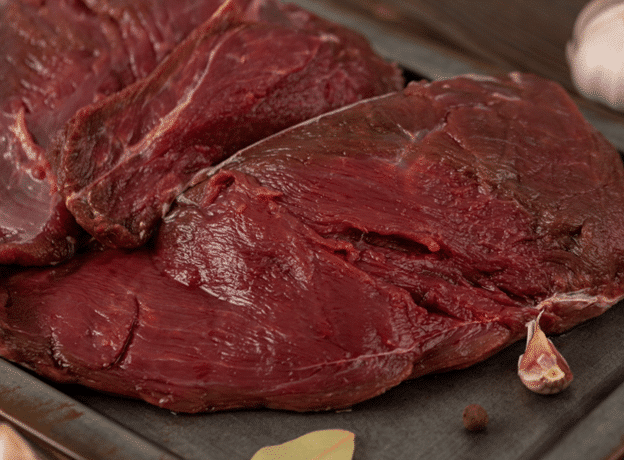
Why It Matters: Venison donation programs help hunters feed people in need while supporting state efforts to manage locally overabundant deer populations. Processing costs and limited processor capacity can constrain these programs. The Congressional Sportsmen’s Foundation (CSF) has supported state legislation addressing those barriers, and the recent Executive Order, Reinvigorating America’s Hunting Heritage, directs federal agencies to support wild-game donation efforts.
Highlights:
- The Executive Order directs the United States Department of Agriculture (USDA) to support state venison donation programs and the Department of the Interior to encourage the use of Pittman-Robertson funds for managing hyperabundant wildlife, including activities that facilitate wild-game processing and donation.
- Venison donation programs help hunters provide nutritious meals to people in need while supporting state efforts to manage locally overabundant deer populations.
- CSF submitted testimony supporting Missouri legislation to continue meat-processor tax credits and supported Maryland’s enacted legislation providing tax credits for processing and donating antlerless deer.
With deer seasons underway, Executive Order 14429, Reinvigorating America’s Hunting Heritage, highlights an opportunity to strengthen programs that connect hunters’ harvests with people in need while supporting wildlife management.
CSF has directly supported policies that help make these donations possible. In Missouri, CSF submitted testimony this year supporting legislation to continue tax credits for meat-processing expansion and modernization, citing processors’ importance to hunters and the state’s Share the Harvest program. In Maryland, CSF supported legislation enacted in 2018 providing tax credits for processing and donating antlerless deer. Both efforts address practical barriers to getting hunters’ harvests to people in need.
The Executive Order brings federal attention to these same needs. It directs USDA to issue guidance supporting state venison donation programs, including through the Emergency Food Assistance Program. It also directs Interior to encourage state wildlife agencies to use Pittman-Robertson funds to manage hyperabundant wildlife, especially White-tailed deer, including activities facilitating wild-game processing and donation for schools and food banks.
By helping states address processing needs, implementation of these directives could strengthen hunters’ ability to donate deer harvested under state management programs. Where additional harvest is needed to manage locally abundant populations, effective donation programs provide an outlet for venison beyond what hunters can use themselves—connecting science-based wildlife management with nutritious meals for their communities.