
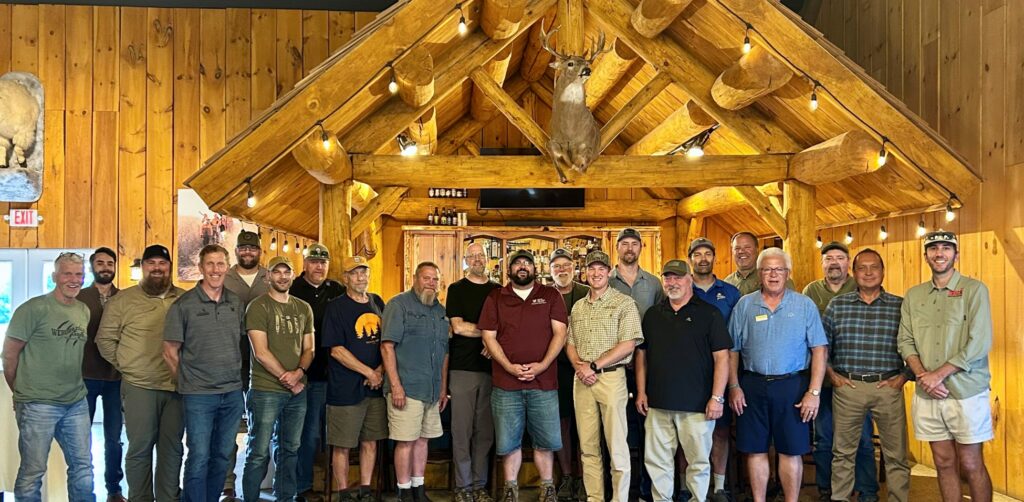
Why It Matters: While legislators are back in their districts knocking on doors, it is important for sporting conservation stakeholders to ensure that they are ready to advocate for sound hunting, fishing, trapping, and shooting policy once the gavel falls in 2027.
Highlights:
- The Congressional Sportsmen’s Foundation (CSF) participated in an event in Wisconsin last week that brought together sporting conservation organizations.
- The discussion was centered around the conservation funding challenges that the state has faced in recent years.
- Convening these groups to discuss priorities and tactics before the next legislative session begins is an important step towards finding success once legislators return to their desks.
Last week, the Congressional Sportsmen’s Foundation joined sporting conservation partners just outside of Madison, Wisconsin to shoot sporting clays and participate in important discussions on the upcoming legislative session in the Badger State. While each conservation organization shared their priorities for 2027, the common thread that dominated the conversation was conservation funding.
Despite consistent and coordinated efforts by state and national partners throughout the 2025-26 legislative session, Wisconsin’s nearly four-decade old conservation fund, the Knowles-Nelson Stewardship Fund, was not reauthorized. Moving forward, stakeholders have turned their collective attention towards finding an alternative solution for the state to complement the revenue generated by the American System of Conservation Funding.
At last week’s meeting, CSF presented to the group on reimbursing the Wisconsin Department of Natural Resources (DNR) for lost revenue from free and discounted licenses. Not only is the agency missing out on millions of dollars that would be realized through license sales, but they are also missing out on significant federal dollars that are not being dispersed through the respective Sportfish and Wildlife Restoration Funds. While creative, supplemental approaches are increasingly necessary to help offset the rising departmental costs being felt by fish and wildlife agencies across the country, it is important to ensure that states are maximizing the opportunity offered by the highly successful framework that is already in place.
CSF will continue to work with partners and state caucuses to tackle issues relevant to sportsmen and women and their outdoor pursuits.