
By: Taylor Schmitz, Senior Vice President and COO of the Congressional Sportsmen’s Foundation
In a world where the nearest grocery store could be less than a mile away, why do we hunt? What’s the appeal of fishing, and why do we do it? Isn’t trapping just controversial? Are any of these pursuits even necessary anymore?
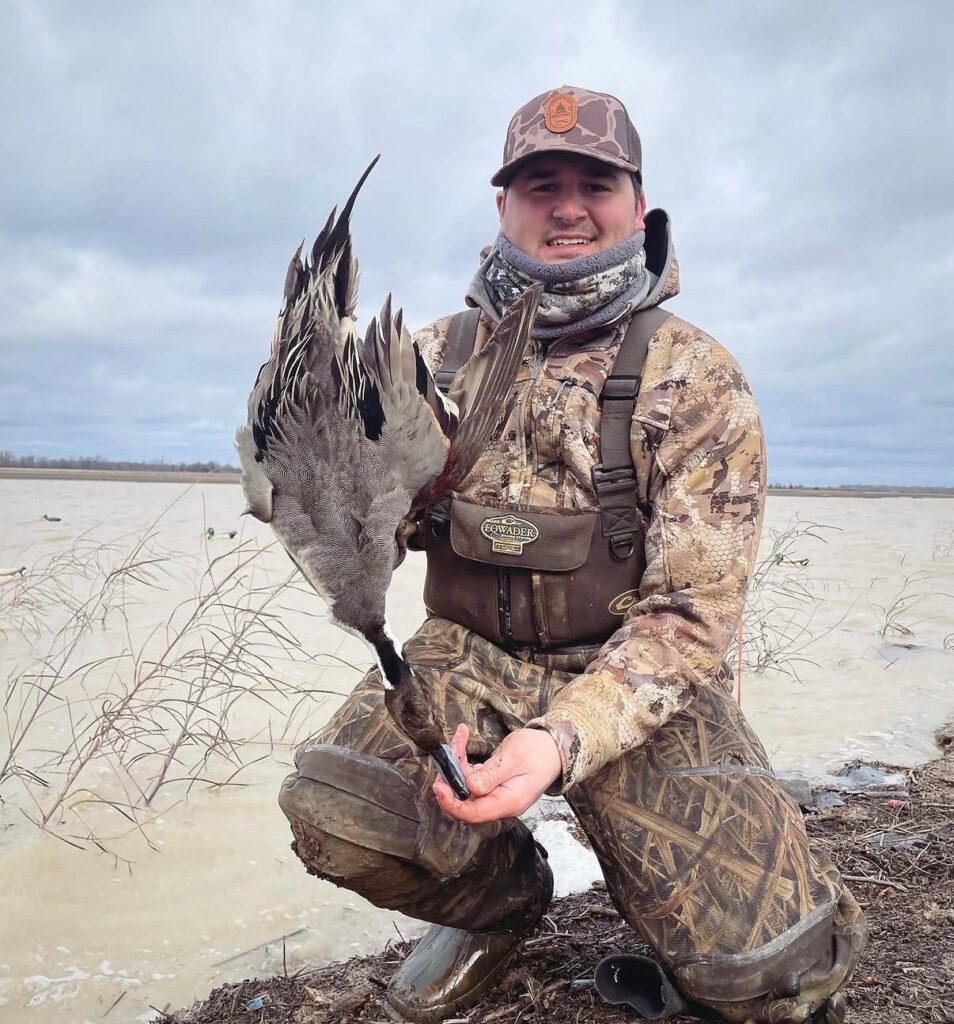
If you’re an avid outdoorsman like me, those questions probably aren’t really crossing your mind. We know our ‘why’, and what drives us to get out and hunt, fish, trap, and shoot. Can the same be said for those around us that don’t hunt, fish, trap or shoot? How does the barista at the local coffee shop that you go into wearing your camo jacket feel about your chosen lifestyle and pursuits? What about your mailman who sees the antlers on your front porch, or even your best friend? Perhaps, most importantly, how do the elected officials who represent you feel about these issues?
Recent research shows that, for the first time in several decades, we’re now seeing a statistically significant decline in public support for hunting and fishing at the national level. On top of that, hunters and anglers in America now represent only about 10 percent of the population, with hunters coming in right around 4%. By no means will sportsmen and women ever be a voting bloc in this country – nor could our public lands or fish and wildlife resources accommodate it if we were. However, in a changing world where our voice is in the minority, how do we maintain our ability to enjoy our time-honored outdoor traditions?
The dedicated team of hunters, anglers, and policy professionals at the Congressional Sportsmen’s Foundation (CSF) work at both the federal and state level to protect and advance our ability to get outdoors both now and for generations to come. As the trusted voice for America’s 55 million sportsmen and women, CSF works across party lines and beyond all political challenges to ensure that sportsmen and women are being heard on Capitol Hill and in state capitals from coast to coast. We work with our unique collection of Caucuses, the Congressional Sportsmen’s Caucus (CSC), the Governors Sportsmen’s Caucus (GSC), and the National Assembly of Sportsmen’s Caucuses (NASC), to ensure elected officials are educated about the sporting-conservation community’s pressing issues and are working together to secure victories for conservation and on behalf of hunters, anglers, recreational shooters, and trappers.
Through our work with these Caucuses, we have made a huge difference in educating those that represent us all, but there is still plenty more work to be done when it comes to educating the general public, which ultimately comprise the constituencies of our elected officials – a group to which they are ultimately responsible to for representing their interests in the legislature. With fewer Americans participating in hunting, fishing, and trapping compared to previous generations, misconceptions about the roles that these activities play in wildlife conservation have grown. With this misconception and divide, coupled with very loud and well-funded misinformation campaigns by anti-sportsmen organizations, the sporting-conservation community is facing a dangerous challenge in the form of public perception – one than can make or break us if we don’t do something to address it. To help maintain or increase support for our time-honored traditions from the public, CSF has made the establishment of wildlife councils a top priority.
Wildlife councils were born out of necessity, not only as much-needed educational platforms but also as a defensive line for America’s rich outdoor sporting traditions and conservation. State wildlife councils are a vital mechanism for educating the public, advocating for conservation, and ensuring that the voices of hunters, anglers, and trappers are heard and understood. Wildlife councils are not rulemaking bodies like a state fish and wildlife agency commission, rather, the core function of state wildlife councils is to inform and engage the general public, especially those who do not hunt or fish, about the critical contributions sportsmen and sportswomen make to conservation. These councils use media campaigns, educational programs, and community outreach to explain how wildlife management works and why it’s necessary, illuminate the economic impact of hunting, fishing, and trapping, reinforce the fact that these outdoor pursuits fund conservation through license fees, excise taxes, and voluntary contributions, and foster mutual understanding between rural and urban populations.
Recognizing the public perception challenge our community is now facing and the critical need to inform the non-sportsmen public about the integral role that hunters, anglers, trappers, and recreational shooters play in wildlife conservation, Colorado took the lead in 1998 by establishing the Colorado Wildlife Management Public Education Advisory Council (WMPEAC). This was the first state-led effort to systematically educate the public about the positive impact of hunting and fishing on conservation. Public perception on our outdoor pursuits will be especially important this year, as a right to hunt and fish constitutional amendment is on the ballot this year in Colorado.
Michigan followed Colorado’s lead in 2013, passing HB 4993 and creating the Michigan Wildlife Council within the Department of Natural Resources (DNR) – a well-funded wildlife council aimed at long-term public engagement and education.
These councils, and their mission of delivering marketing campaigns focused on maintaining and building cultural support for hunting and fishing, should not be confused with efforts to recruit, retain, or reactivate new hunters and anglers. These are two separate issues, and one cannot exist without the other. These councils focus 100% on media campaigns that target specific non-sportsmen demographics. While this messaging may attract younger generations and new demographics to join us in our outdoor traditions, that is not the primary goal of wildlife councils – but securing public awareness of the benefits that our outdoor pursuits provide for conservation is.
The core strategy of state wildlife councils revolves around utilizing the funds generated from hunting and fishing license surcharges to finance comprehensive marketing campaigns. These campaigns are meticulously crafted to resonate with the general public, particularly those who do not engage in hunting or fishing activities. The campaigns emphasize themes such as responsible science-based wildlife management, the scientific foundations of conservation practices, and the tangible economic benefits hunting and angling provide to local communities and states.
The Colorado Council has launched campaigns like “Hug a Hunter” and “Hug an Angler,” emphasizing the gratitude owed to those who financially and physically contribute to the stewardship of wildlife – sportsmen and women. Similar to the “Hug a Hunter/Angler” campaigns, Michigan’s “Here. For Generations.” initiative also highlighted that the conservation of Michigan’s fish and wildlife and their habitats are paid for by sportsmen and women. These campaigns were disseminated through various channels, ranging from public transportation wraps and bus stop signs to television, radio, and digital platforms, ensuring a wide-reaching impact.
Colorado and Michigan passed legislation mandating the creation of their councils and the collection of small surcharges on hunting and fishing licenses to fund their operations. Wildlife councils thrive when structured properly, and legislative action is essential to their formation and sustainability. That is where CSF comes in, as the development of wildlife councils is one of our top priorities. By developing model legislation that takes into consideration fixes to challenges previously faced and the exact guidelines for success, CSF is taking a proactive approach to this worthwhile cause.
The two currently established councils are made up of nine appointed, non-compensated citizens from that state that serve a three-year staggered term. These citizens hold diverse backgrounds and experience, and the wildlife councils are set up to ensure that that remains true. Through guidelines that set a standard for differing qualifications and even geographical locations, it is ensured that wildlife councils are well-rounded and, in turn, effective.
For example, CSF recommends guiding language for the development of wildlife councils that stipulates that they are made up of the state fish and wildlife agency’s director, or a designated representative of the director, and eight appointed members as follows:
- Two individuals who have regularly purchased a hunting license in this state and have purchased at least three licenses in the last five years.
- Two individuals who have regularly purchased a fishing license in this state and have purchased at least three licenses in the last five years.
- One individual who represents businesses in the state that are substantially impacted by hunting and fishing.
- One individual representing agricultural producers in the state.
- One individual with a media or marketing background who is not an employee of the state fish and wildlife agency.
- One individual representing rural areas of this state whose economies are substantially impacted by hunting and fishing.
As with many things, for wildlife councils to be successful, they need to be funded. On top of that, the purpose of that funding must be set is stone to be used only for its intended purpose. CSF’s model legislation addresses this challenge by ensuring that there are clear guidelines for funding. The two established wildlife councils are funded through modest surcharges on hunting and fishing licenses. In Colorado, a $1.50 surcharge per license funds the council, creating annual budgets that have reached nearly $1.85 million. In Michigan, a $1 surcharge supports their education fund, which gathered over $1.77 million in 2021 alone through license sales. These funds generated through license surcharges have enabled the councils to implement extensive outreach programs, thereby amplifying this critical messaging.
This is where the support of the sporting-conservation community comes into play. Wildlife councils are much more than public relations bodies. They are strategic programs that safeguard the future of American conservation by connecting citizens with the outdoors and illuminating the often-hidden contributions of sportsmen and women. In a time when the sporting community is facing growing attempts to limit our ability to do what we love, this is an investment in our future. Simply put, even if your state is incredibly strong in their support for hunting currently, that may at one point change, and you’re still going to want to have the firehouse in place before the fire, not after. Public education is the best protection against ballot initiatives that attempt to limit the activities of hunters and anglers. As seen with Colorado’s Ballot Initiative attempt at ending the hunting and science-based management of big cats just last year, these attempts can be defeated if the public is educated and aware.
Why else is this investment worth it?
One of the most critical benchmarks for the success of wildlife councils is public opinion. In states where councils have been active, measurable shifts have occurred in public perception. The Michigan Wildlife Council has demonstrated effectiveness at moving the needle in residents’ opinions on our time-honored traditions.
A statewide study in 2020 found that in Michigan:
- Despite a national decline, approval of hunting in Michigan has held steady. There is continued high support for hunting (83%) and fishing (86%) in the state. In fact, at that time Michigan was the only state surveyed to not see a decline in their approval of hunting.
- 50% of the state now recognizes that science-based wildlife management by humans is necessary, a significant increase from 39% at the beginning of 2015.
The efficacy and broad influence of the campaigns by the Colorado Wildlife Council were also put through rigorous testing last year, when extremely well-funded out of state anti-hunting groups had Proposition 127 on the ballot, seeking to end mountain lion and bobcat hunting. These groups sought to misinform residents of Colorado, sharing emotional messaging and misrepresenting facts to try to contrast and overshadow the messaging of how hunters are critical to conservation. The Colorado Wildlife Council ran a successful campaign to educate the public on the value of science-based wildlife management, and was a contributing factor to the ultimate defeat of Prop 127 – along with concerted and multi-pronged, multi-million-dollar advocacy campaigns by the sportsmen’s community.
These findings highlight the power of sustained public education efforts. When the public understands the connection between hunting, fishing, and conservation, support increases – even among those who don’t personally participate in those activities.
Given their success, wildlife councils could serve as a national model for bridging cultural and political divides for the benefit of conservation. They exemplify how data-driven outreach can influence public opinion and policy in a positive, bipartisan way. We encourage other states to adopt or expand their own wildlife councils, using the examples of Colorado and Michigan as blueprints and the model legislation we have developed to establish an advocating entity for our pursuits. The result could be a more informed, engaged, and conservation-minded public—one that sees hunters and anglers not as adversaries of nature, but as stewards of wildlife and wild places.
The ongoing survival of America’s time-honored traditions may well depend not just on habitat restoration or species protection, but on the public’s understanding of who makes that work possible—and why it matters.
I am proud to be a sportsman. It is the center of my world, even translating into being the focus of my career here at CSF. In my pursuit to safeguard the future of our time-honored traditions, I see the importance of investing and activating as a community. Wildlife councils are a giant leap in the right direction, and you can bet we will continue to work towards creating these programs across the states. As an avid hunter and angler, I will gladly pay a little extra to ensure a future for what I love most, and I hope that this article will convince you to feel the same. If this resonated with you in the way I hope it will, I encourage you to reach out to your elected officials and voice your support for the concept of a wildlife council and your willingness to pay more for your licenses to fund a future for hunting and fishing.
For more information about CSF and wildlife councils, please visit Wildlife Councils for Public Education – Congressional Sportsmen’s Foundation.