
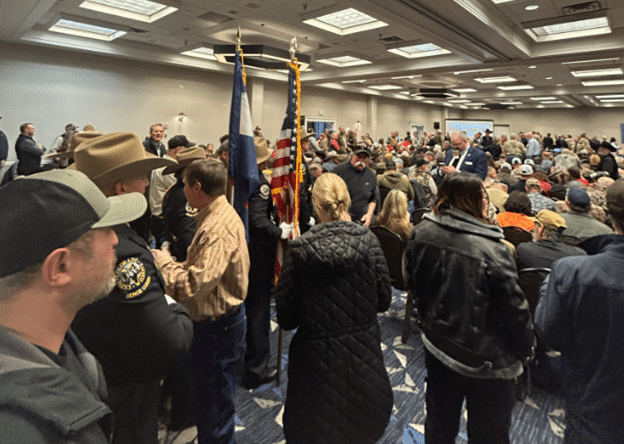
Why It Matters: State fish and wildlife agencies, like Colorado Parks and Wildlife (CPW), are the fundamental entities that secure our sporting heritage. CPW biologists and game wardens professionally manage our wildlife for the benefit of all members of the public, even though the vast majority of CPW funding comes from sportspeople. The Colorado Parks and Wildlife Commission is the rule-making arm for CPW, and on March 4, 2026, they voted to adopt a citizen’s petition for rulemaking, despite robust opposition from the Congressional Sportsmen’s Foundation (CSF), CPW staff, numerous other sporting-conservation organizations, and hundreds of sportsmen and women in the room.
Highlights:
- CSF gave oral testimony in opposition to the Citizen’s Petition to Ban the Commercial Sale of Wildlife Furs considered by the CPW Commission, centering our objections around the North American Model of Wildlife Conservation (NAMWC) and the lack of science supporting this action.
- Despite the widespread opposition, the Commissioners voted 6-4 to approve the petition and bring it into rule
- The citizen’s petition is wrought with legal, scientific, and ethical issues, and still has a long way to go before it officially before it becomes rule in Colorado.
The March 4th Colorado Parks and Wildlife Commission meeting was held at a 400-seat banquet hall in Denver. When the meeting began, there was barely any standing room left around the perimeter. The majority of the room was sportspeople, many of whom were adorned in fur and camouflage, and who were present to express their opposition to the Citizen’s Petition to Ban the Commercial Sale of Wildlife Furs. Some had been at the venue since 4:30 am, and the tension in the room was palpable. When it came time for public comment, sportsperson after sportsperson, including County Commissioners, wildlife professionals, and representatives of sporting organizations, were called to the microphone to give testimony.
Opposition to the petition was the vast majority of testimony heard, although many stakeholders had different reasons for opposing. The chief complaint among them was the lack of scientific evidence to support this petition. Many pointed out that CPW put out a response to the petition, formally opposing it and stating “the petition relies heavily on uncertainty about these species’ population trends and the possibility that the commercial sale market is driving harvest past sustainable population limits. But the petition lacks solid evidence that commercial fur sales drive harvest levels in Colorado.” Many others pointed out that this was very similar to a fur ban referendum Denver voters had soundly rejected in 2024. There were also concerns raised about whether the Commission had the legal authority to impose a ban like this, how it would interact with wanton waste statutes, and many others.
CSF testified about the critical mistakes the petition made in comparing the unregulated market hunting of the 19th and 20th centuries to today’s legal, regulated trapping and hunting activities that are guided by CPW’s science-based approach to wildlife management. CSF also stated that we strongly believe well-regulated, science-based trapping and the associated wild fur trade are critical tools state fish and wildlife agencies rely on for wildlife management, and our position is congruent with the Association of Fish and Wildlife Agencies’ (AFWA) perspective, of which CPW is a member.
Unfortunately, the Commission voted 6-4 to bring the petition into the rule making process, despite a severe lack of scientific evidence supporting this decision. The petition still has a long road before it becomes an official rule. CSF will be there every step of the process opposing the rule and urging the Commission to rely on the expertise of CPW’s professionally trained staff and oppose this provision. CPW staff have, time and time again, demonstrated a strong commitment to the conservation of Colorado’s public trust wildlife resources, including the importance of well-regulated harvest and utilization requirements as outlined in the North American Model of Wildlife Conservation.
This isn’t the first time we’ve seen an attempt to ban the sale of wild game furs, or even the first time in Colorado. However, know that when attacks on our sporting heritage rear their unscientific heads, the Congressional Sportsmen’s Foundation will be right there opposing them, fighting the good fight on behalf of all sportspeople.