
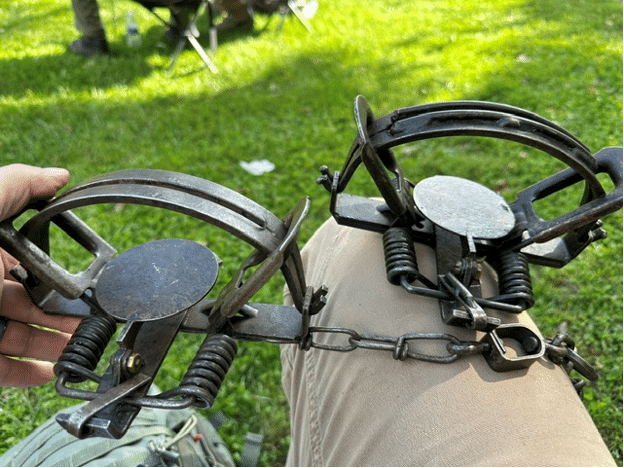
Why It Matters: The regulations set forth by state wildlife agencies on trapping methods are among the most complex and comprehensive of any laws concerning wildlife harvest today. In 1985, the Canadian government attempted to establish a world standard for humane mammal traps through the International Organization for Standardization (ISO). Among those responsible for setting the standards was the United States Technical Advisory Group (TAG), comprised of veterinarians, biologists, animal welfare representatives, trappers, and the general public. Extensive research on restraining traps has been conducted through annual appropriations from Congress to the Association of Fish and Wildlife Agencies. Such research resulted in the development of Best Management Practices (BMPs) in 1996, incorporating trapping methods for many fur-bearing species. It is with these standards in mind that today’s regulated trappers tend to their equipment and, with summer being the “off season,” now is the perfect time to break out the gear for annual inspection and maintenance.
Highlights:
- The restraining trap BMPs developed for each furbearer species evaluated are voluntary recommendations to state fish and wildlife agencies, trappers, and trap manufacturing companies.
- Annual inspections and equipment maintenance are crucial for keeping equipment operating within BMPs.
- Taking the time now allows for troubleshooting, servicing, repairs, upgrades, and a far better experience when seasons open later this fall.
Despite the 100°F heat gripping much of the nation last week, rest assured that trappers all over the country are thinking about cooler days wading in waterways and digging in dirt. Before seasons commence around the country, today’s modern and seasoned trappers are unpacking their equipment for off season maintenance routines. All trappers have their own way of doing things and if you are new to the craft, you’ll want to develop your own. The key is consistency and repetitiveness – from how you set up your packs and lure bags, to how you inspect all the parts of your traps and the conditioning of those traps, so they are ready to hit the dirt and water and are in full working order for the target species and avoidance of nontargets as per current BMPs.
Familiarizing yourself with the nomenclature of a given trap, a foothold for example, will allow for a step-by-step inspection that is repeatable, so no part is missed. One may start with the jaws and move to the pan by inspecting screws, nuts, pan tension, and latching. From there, inspect the dog (this is what holds the jaw open until the pan is set off. Move down to the baseplate checking for cracks, bends, and then working down springs or levers. Finally, inspect chains, swivel points, solder points (if you have them), and anchor systems. After any repairs, adjustments, or passing inspection, the next step with land set traps is dying and waxing. Dying will help preserve the metal, camouflage the trap, and help with scent control, especially when targeting canines. For body gripping traps, use spray paint or dye as well. After traps take a hot dye bath using products like logwood dye or speed dip (which uses gasoline), traps are ready to be waxed and hung. Wax will also aid in scent control, trap mechanics, and protect metal. Once dried, traps can be (and should be) systematically stored for efficiency in anticipation of opening day. Don’t forget to inspect the dog and pan notch, as waxing can create a dried drip of wax that will need to be filed. It can also fill in any night latch you may have. No one wants to fight with tangled traps when you’re opening a line.
There are many online resources like those at Fur Takers of America and the National Trappers Association that can aid the green trapper or even allow old dogs the opportunity to learn new tricks! In the end, we want the best, most efficient, and ethical gear deployed for the wellness of the furbearers we care for. Consistency is key. Be boring and set your gear up the same way every time and you won’t miss a step and will have a more enjoyable 2026-2027 season.
The Congressional Sportsmen’s Foundation (CSF) is dedicated to promoting and protecting scienced based wildlife management, using approved and ethical methods of take as prescribed by our partners within state agencies as well as our federal partners. CSF has successfully fought off attempts to limit or remove modern trapping equipment and trapping. Right now, CSF is taking the fight to the anti’s in Colorado where the commission is considering the ban of all sales of fur, and in Oregon with IP28, which would ban all take. Legislative victories in Rhode Island in 2025, Colorado in 2024, in New Hampshire in 2020, are just a few of the anti-trapping, anti-fur sales legislation that has been fought off and defeated in recent years.