
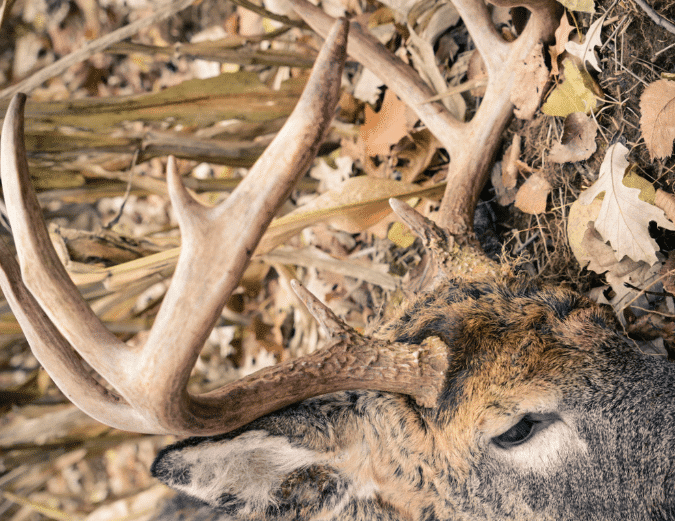
Why It Matters: Year after year, there are new and innovative technologies impacting all aspects of life, and hunting is certainly no exception. Unmanned aerial vehicles, known as drones, have increased in popularity and have crept into the hunting community where many hunters seek their use in tracking wounded game.
Highlights:
- In 2025, House Bill 175 (HB 175) passed the Tennessee General Assembly which directs the Tennessee Wildlife Resources Agency (TWRA) to promulgate rules regarding the utilization of drones used for the purpose of locating and recovering a wounded deer.
- Earlier in 2026, the Tennessee Fish and Wildlife Commission (TFWC) unanimously passed rules to conform with the HB 175 directive, which goes into effect next month.
Regardless of your age, it is most likely correct to assume that you have lived through a new wave of technology entering the sporting conservation arena. Whether it was fish flashers that rose to popularity in the 1960s and 1970s that have now developed into real-time, 360-degree sonar units, or the rapid adoption of trail cameras over the last two decades, throughout history, new and evolving technologies have continued to shape our time-honored traditions. One common denominator is that wildlife managers have always carefully crafted new regulations to address growing technology concerns, all while keeping science-based wildlife management at the forefront of every proposal and decision. The use of drones to recover game is no exception to this emerging trend.
The TFWC adopted rules earlier this year that seek to balance fair chase ethics with the rise in popularity of drones used to recover wounded deer. The rules developed by the TFWC specify that “a drone may be used for locating and recovering a deer that is reasonably believed to have been wounded while a person is lawfully engaged in hunting in the following circumstances:”
- A drone can only be used when traditional and historical tracking methods have been attempted;
- A drone cannot be used in a way that gives a hunter an unfair advantage nor can a drone be used in the absence of a reasonable belief that a mortal shot has been inflicted;
- A drone may be used only when the drone pilot and hunter are not in possession of a firearm or weapon that could be used for deer hunting;
- A drone may only be used for deer recovery only from 30 minutes after official sunset until 3:00am the following morning;
- Drones may only be used to recover deer on private property; and
- Drone pilots must be in compliance with Federal Aviation Administration (FAA) regulations, including being registered with the FAA to use a drone for deer recovery, among other provisions.
As the science-based wildlife management agency in Tennessee, the TWRA, and its governing body, the TFWC, are best equipped to handle complex wildlife management decisions. The amount of detail and careful consideration that went into the above-mentioned rule thoroughly addresses emerging technology while safeguarding fair chase ethics within our time-honored traditions.
The Congressional Sportsmen’s Foundation (CSF) advocates for methods that allow hunters to fill their ethical obligation to successfully recover game and enjoy the fruits of their harvest. Over the years, CSF has supported expanding opportunities to recover wounded game including the use of blood tracking dogs as well as advancements in technologies, like drones, thermal imaging, and more, while maintaining a clear delineation between recovery and the continuation of the hunt. These rules in Tennessee show succeed in showing that strong delineation between the use of drones for recovering game vs hunting. While rules can be crafted governing the use of drones to recover game, it is ultimately the responsibility of us as hunters to practice fair chase ethics and not abuse new and innovative technologies when applying them to our hunting traditions.
Related Policy
