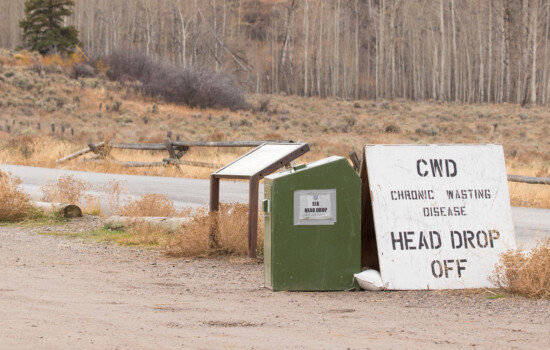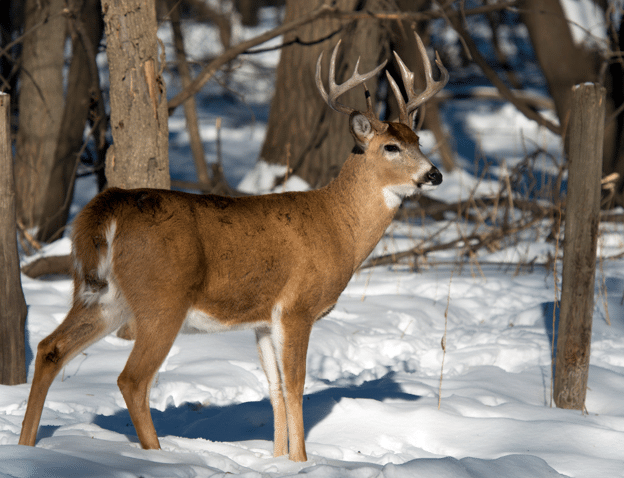
Why It Matters: Chronic Wasting Disease (CWD) is an always-fatal, progressive, degenerative neurological disease occurring in farmed and free-ranging deer, elk, and moose that is classified to the family of diseases called transmissible spongiform encephalopathies. Presently, state fish and wildlife agencies are forced to divert funds from other conservation projects to perform surveillance and monitoring of CWD within their jurisdictions. A newly confirmed case in a wild deer in western New York is a reminder that New England’s relative success in keeping the disease out of the region cannot be taken for granted. Hunters, wildlife agencies, and policymakers all have a role to play in protecting our region’s wildlife resources.
Highlights:
- New York confirmed CWD in a wild white-tailed deer in Livingston County in November 2026, the state’s first wild detection since 2005.
- New England continues to have no documented positive CWD cases.
- CWD is always fatal in infected cervids, and there is currently no known treatment or vaccine.
- Hunters play an essential role in disease surveillance and preventing its spread.
For generations, deer hunting has been woven into the fabric of New England. It supports wildlife conservation, sustains rural economies, provides healthy food for families, and connects sportsmen and women to the natural resources that make our region special. Protecting that tradition means taking emerging wildlife threats seriously, and few deserve more attention right now than Chronic Wasting Disease.
On November 6, 2026, the New York Department of Environmental Conservation (DEC) announced the detection of CWD in a wild white-tailed deer harvested in the town of Sparta, Livingston County. The latest wild detection prompted New York to establish a containment area encompassing six towns and implement additional testing requirements.
CWD is a fatal neurological disease caused by abnormal proteins called prions. It attacks the brain and nervous system of infected animals, including white-tailed deer, moose, and elk. The disease spreads through direct animal contact and exposure to contaminated bodily fluids, carcasses, soil, and vegetation. Once established, CWD has proven extraordinarily difficult to eliminate.
As of November 2026, none of the six New England states have documented a positive CWD case. Maine, New Hampshire, Vermont, Massachusetts, Connecticut, and Rhode Island continue to maintain surveillance and prevention efforts. New Hampshire Fish and Game, for example, has tested thousands of deer since 2002 without a positive detection.
CWD does not adhere to political boundaries, and the movement of infected carcasses, certain animal parts, and potentially contaminated equipment can contribute to its spread. Hunters traveling outside New England need to understand and follow carcass transportation restrictions when returning home. This is where sportsmen and women become an important part of the solution. Following carcass importation regulations, not transporting prohibited animal parts, and cooperating with state wildlife agencies’ sampling programs are all meaningful steps hunters can take.
There is currently no evidence that CWD has infected people, but public health officials recommend against consuming meat from animals that test positive. Hunters should take advantage of available testing opportunities and follow appropriate handling recommendations.
The Congressional Sportsmen’s Foundation (CSF) recognizes that protecting hunting opportunities begins with protecting wildlife resources that make those opportunities possible.Keeping CWD out of our region should be a shared priority among hunters, conservation organizations, wildlife professionals, and policymakers.
Related Policy