
Why It Matters: As conservationists, we spend a tremendous amount of time focused on what ideal habitat looks like for particular species of wildlife. However, conversations often end at this idyllic image, stopping short of the real-world factors that influence whether that image manifests on the ground. In forest ecosystems, meaningful markets for timber products remain among the most important real-world factors influencing active forest management operations today. The Congressional Sportsmen’s Foundation (CSF) is working closely with conservation and forest industry partners to shine a light on this important relationship and its impacts on sportsmen and women.
Highlights:
- Markets for U.S.-grown timber are down across most sectors, creating significant challenges for an important American industry and the landowners who have invested heavily in growing timber on their properties.
- As markets wane, active forest management operations that, often purposefully, create and improve wildlife habitat, tend to cease due to economic factors tied to these markets.
- The Congressional Sportsmen’s Foundation is working closely with members of CSF’s Forestry Advisory Council to understand and address market-related challenges, supporting the timber industry, forest landowners, and the sportsmen and women who rely on the habitat conditions they create and manage.
Superfans of the hit sitcom The Office may remember an episode featuring the Michael Scott quote, “Limitless paper in a paperless world.” Almost twenty years later, the latter half of this statement, coupled with other challenges facing American timber producers, stands at the heart of one of the fastest-growing conservation challenges that we face today: we have an abundance of trees and not a lot of use for them. American timber markets are down for almost every sector, which is forcing mills to close, costing American jobs, and influencing decisions regarding the current and future management, and in some cases existence, of our nation’s forests.
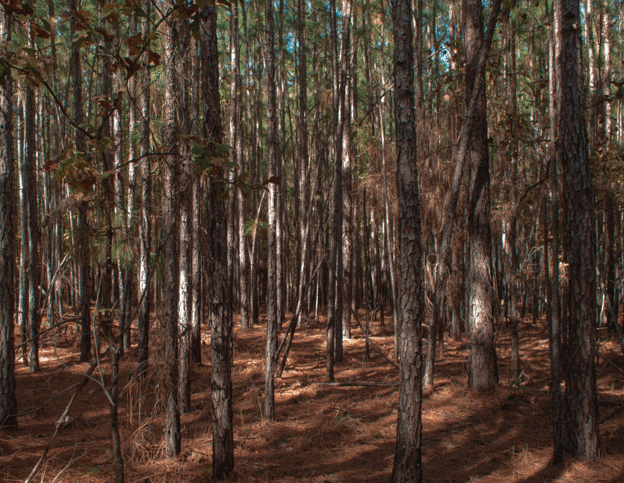
Without a healthy market, encouraging timber harvest, finding a crew to do it, and finding a mill to take it becomes almost impossible. In parts of the Southeast, mills for pine pulp, the product typically derived from small diameter trees during stand thinning treatments, are closing their doors. As a result, the thinning operations that once generated enough revenue to carry landowners through to final harvest can actually cost landowners money as they pay crews to perform the thinning treatment. This problem is not, in any way, limited to the Southeast, and the ecological impacts are tremendous.
Starting with the most obvious threats, overgrown stands that lack active management treatments (e.g., thinning, prescribed fire, etc.) are increasingly susceptible to wildfire risks as fuel loads continue to increase. As landowners face the decision not to thin when they traditionally would to generate revenue and free remaining trees from competition, overcrowding continues, the vigor of individual trees suffers, and fires become a serious threat. In this example, we could also substitute fire risks with disease or insect infestations, or a combination of the three, further highlighting the risk these realities pose to the forest. For wildlife, these risks stand in the shadow of the lack of understory habitat traditionally created through harvest practices as sunlight is returned to the forest floor. This is where hunters know how impactful timber markets can be on our success afield. If the habitat quality is not there, neither are the deer, turkey, quail, or other species that rely on well-managed forests for their own success.
But we are not giving up! CSF, working closely with members of the Forestry Advisory Council, is actively trying to raise awareness of the interrelatedness of timber markets and wildlife conservation. This includes current and ongoing efforts to expand market availability – reasons CSF and many others are supporting legislation such as the Wildfire Reduction Market Expansion Act and are excited to see the newly introduced Strong American Wood (SAW) Act, led by Congressional Sportsmen’s Caucus Co-Chair and professional forester Congressman Bruce Westerman (AR).
Regardless of how we use it, we must have healthy markets for timber products to have healthy forests and quality wildlife habitat. Otherwise, we will continue to see conditions deteriorate. Worse than that, without viable markets, we will continue to lose ground to one of the biggest challenges facing conservationists today as more forest landowners are forced to give in to mounting development pressure, losing those acres forever.