
Why It Matters: The 2026 general legislative session has kicked off in the “Sportsman’s Paradise”, and legislators have wasted no time in introducing dozens of bills impacting wildlife and fisheries. Among those are reining in the commercial menhaden industry, expanding recreational hunting opportunities, protecting sensitive data from public records requests, and much more.
Highlights:
- As of March 19, there have been at least five bills impacting menhaden management off the coast of Louisiana. All of these bills have been introduced by members of the Louisiana Legislative Sportsmen’s Caucus (Caucus).
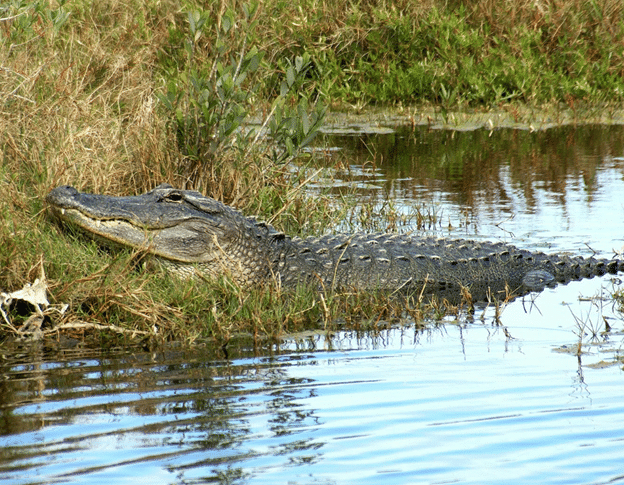
- On March 9, Caucus Member Senator Robert Allain introduced SB 244, which would allow the Louisiana Wildlife and Fisheries Commission to establish a recreational alligator hunting season.
- Also on March 9, Caucus Member Representative Neil Riser introduced HB 858, which exempts the Department of Wildlife and Fisheries’ Global Positioning System (GPS) data on wildlife and aquatic life from public records requests.
- On the regulatory side, the Louisiana Department of Wildlife and Fisheries is proposing yet another expansion to the annual black bear hunting season, increasing the huntable bear areas from 3 to 7 and increasing the tag allotment.
Louisiana is known as the “Sportsman’s Paradise” for good reason. From duck hunting along the Mississippi River to black bear hunting and world-class saltwater fishing, Louisiana offers a myriad of opportunities for sportsmen and women to participate. As such, the Louisiana Legislative Sportsmen’s Caucus recognizes the cultural and economic importance of our shared outdoor traditions.
Last year, the Louisiana Wildlife and Fisheries Commission voted to reduce the commercial menhaden buffer areas from ½ mile to ¼ mile from the Cameron Jetties to Rutherford Beach, Mermentau River to Rollover, Point Au Fer to Bayou Grand Cailou, and Bay Long to Southwest Pass. A gap in the buffer is also being added between Baptiste Collette and Breton Island in open waters that connect outside waters with waters inside Breton and the Chandeleur Islands. This came after intense public opposition from the recreational angling community. The commercial menhaden industry in Louisiana has no cap on their total allowable catch of menhaden. In addition to catching as many menhaden as they want, Louisiana, up until recently, has had the weakest laws pertaining to how close the commercial fleet can get to shore. Neighboring states like Texas and Mississippi have buffers that extend at least ½ mile, while Alabama and Florida have banned commercial menhaden fishing in state waters. Many members of the legislature have recognized the problem that this poses and are taking action. Legislation includes:
- HB 757 – increases penalties for violation of commercial menhaden buffer,
- HB 855 – requires purse seines to be used only in 22+ feet of water,
- HB 872 -requires AIS tracking on every commercial menhaden vessel,
- HB 886 – requires commercial menhaden harvest data to be public information,
- SB 186 establishes a menhaden harvest limit.
Lastly, protecting GPS data from public records requests not only ensures fair chase, but it also maintains research integrity by the Department as they work closely with private landowners. Protecting private property information only strengthens working relationships between private landowners and the state.
Private lands work was key in the recovery of the alligator and black bear in Louisiana. Now, there are efforts to expand alligator take to include recreational harvests. This creates another opportunity for hunters to get outdoors and assist in managing a species that was brought back in large part due to the revenue generated by the “user pays – public benefits” structure of the American System of Conservation Funding. This success mirrors exactly what has happened with the expansion of black bear hunting in the state, which continues to thrive.
The Congressional Sportsmen’s Foundation (CSF) looks forward to continuing to work alongside the Caucus, the Department of Wildlife and Fisheries, and our partners on all items impacting hunters and anglers in the “Sportsman’s Paradise” this year.