
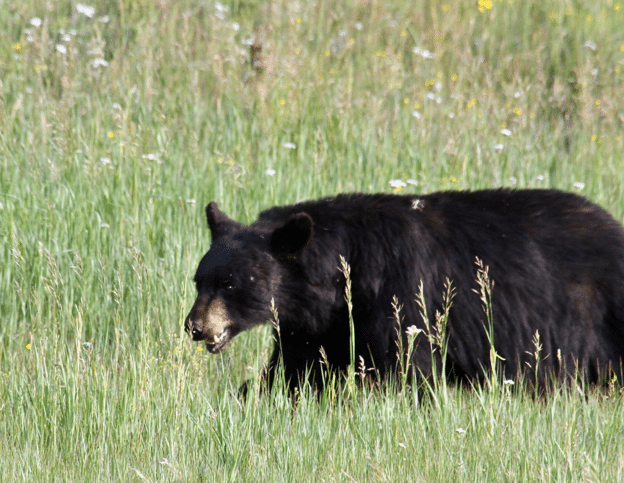
Why It Matters: As New Jersey’s 2026 bear hunt kicks off this October, it is important to acknowledge that regulated black bear hunting is an important tool for managing wildlife populations and maintaining balance between bears and the areas they inhabit. New Jersey’s black bear population has steadily increased over the past decade and is projected to continue to grow throughout the coming years by the New Jersey Department of Environmental Protection (NJDEP). With the increase in population, there has been a simultaneous increase in dangerous human-bear conflicts reported to NJDEP. Through science-based management and hunter-funded conservation, New Jersey’s bear hunt connects responsible harvest with the broader goals of wildlife conservation.
Highlights:
- New Jersey’s 2026 black bear season includes designated hunting zones, harvest limits, and regulations designed to support responsible harvest.
- Mandatory check stations provide biological data that helps wildlife professionals monitor bear populations and guide future management.
- Hunters help fund conservation through license and permit fees and federal excise taxes on firearms, ammunition, and archery equipment.
- Population management is an important factor for a balanced ecosystem and safe coexistence between humans and wildlife.
Managing black bear populations is an ongoing challenge in states where bears increasingly occupy more shared areas with people. Without effective population management, black bear populations can grow and increase the potential for human-bear conflicts, including dangerous encounters in residential areas. New Jersey’s experience illustrates this challenge: in 2022 NJDEP reported a 237% increase in bear incidents from January through October compared with the same period in 2021. The state’s approach to bear hunting has shifted over time: hunting on state lands was suspended in 2018, and after the previous comprehensive black bear management policy expired in 2021, no bear hunting took place anywhere in the state until the 2022 season was reinstated. During this period, NJDEP continued other management efforts, but the absence of a regulated hunt removed one tool from the state’s population management strategy. As bear populations and human-bear conflicts continued to be a concern, New Jersey reintroduced regulated hunting as part of a broader effort to manage the population and reduce dangerous encounters. NJDEP reported a 22.42% increase in incidents from January 1st to September 21st, 2026, compared to the same period in 2025, in their 2026 bear activity report. This shows that reintroducing regulated hunting has been effective at reducing the amount of conflicts between humans and a continuously growing black bear population in the state.
As stated in the North American Model of Wildlife Management, regulated hunting is a vital tool in a comprehensive management strategy, allowing wildlife professionals to manage harvest within established limits while monitoring population trends. The issue of black bear population management is particularly relevant to Connecticut, where the Congressional Sportsmen’s Foundation (CSF) has worked for a number of years to bring a regulated black bear season to Connecticut, which has no regulated bear hunting season. Connecticut Department of Energy and Environmental Protection (DEEP) research and conflict reports demonstrate the challenges of managing a growing bear population in a densely populated state exhibiting statistics of thousands of human-bear conflicts reported annually. New Jersey’s experience provides a regional example of how hunting fits within a broader science-based management strategy for the continually growing population of black bears. If a black bear population is not managed, there will be significantly more growth, as was seen in New Jersey from 2021 to 2022, which resulted in an equal increase in human-bear conflicts that can be dangerous.
Bear hunting contributes to the American System of Conservation Funding and its “user-pays, public-benefits” principle. Through the sales of hunting licenses and permits, along with the manufacturer-level federal excise taxes on firearms, ammunition, and archery equipment via the Wildlife Restoration Fund (Pittman-Robertson), hunters contribute substantial funding to wildlife management and habitat conservation while simultaneously doing much of the heavy lifting in terms of wildlife population management.
New Jersey’s experience demonstrates the challenges that can arise when regulated hunting is absent as a tool available for wildlife management. Following a period without a bear hunt, New Jersey saw a sharp increase in reported bear incidents, prompting the state to reinstate regulated hunting as part of its broader management strategy. Connecticut now faces its own growing black bear population and increasing interactions between bears and people. Rather than wait for these challenges to intensify, Connecticut has an opportunity to learn from its neighbor and consider regulated hunting as apart of a science-based approach to managing its bear population in accordance with the Connecticut Department of Energy and Environmental Protection’s (DEEP) population management goals. CSF has long supported policies that maintain hunting as a tool for effective wildlife management and conservation throughout the nation. CSF looks forward to continuing our multi-year work in the Nutmeg State in partnership with the Connecticut Legislative Sportsmen’s Caucus and our in-state partners to bring about reasonable management policy based in science and DEEP’s population goals.