
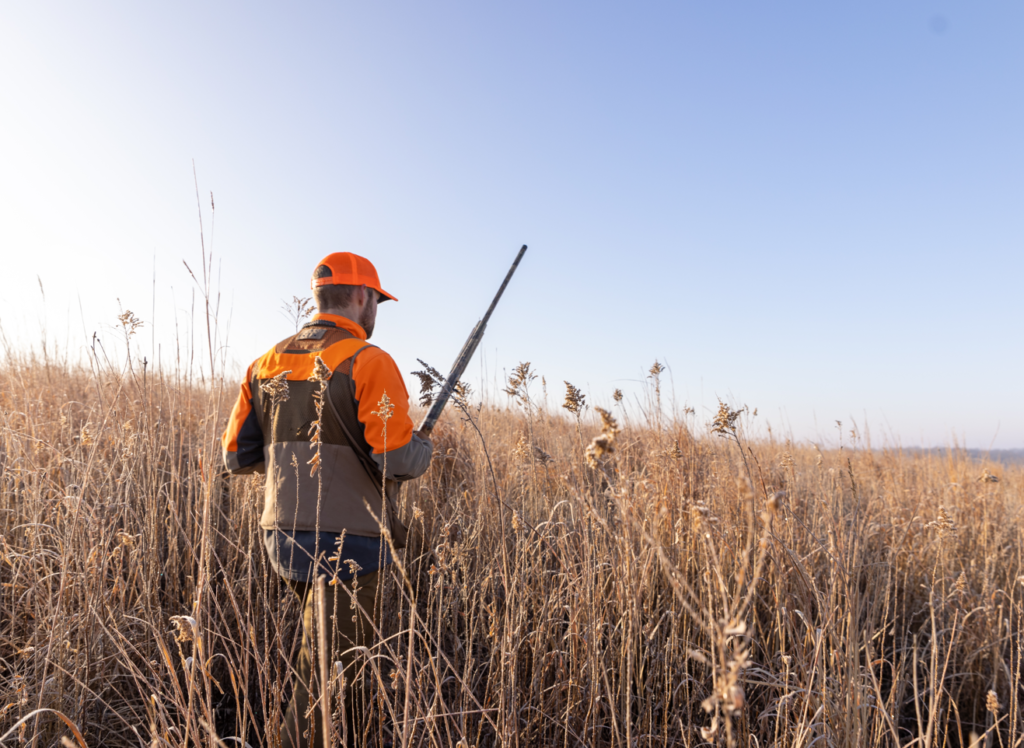
Why it Matters: Across the Great Plains, pheasant hunting season is one of the most anticipated times of the year for sportsmen and women. Pheasant hunting remains one of the most popular upland hunting traditions throughout the region, offering opportunities for friends and families to enjoy the outdoors and share time in the field.
Highlights:
- Pheasant hunting is among the most popular pastimes in the Great Plains region.
- Unnecessary discharge distance restrictions can negatively impact access to quality hunting land.
- The Congressional Sportsmen’s Foundation (CSF) will continue to advocate for policies that benefit sportsmen and women and the game they pursue.
Hunters in the Great Plains region are preparing their dogs and gear for the highly anticipated pheasant season openers. Seasons in North Dakota and South Dakota are already underway with other states opening at the end of October and early November, including Nebraska marking the opening of its 100th pheasant season. The Great Plains offers unmatched opportunities for pheasant enthusiasts to hunt the American grasslands.
In recent years, legislation has been introduced that would impact pheasant seasons by imposing unnecessary discharge distance restrictions. These restrictions typically look to increase the distance in which a hunter can legally discharge their firearm or bow near occupied buildings, roadways, or city limits. In 2025, South Dakota saw legislation that would have doubled the size of its safety zone. Increasing discharge distance beyond what is actually needed for safety erodes huntable acres and reduces hunter access, which in turn harms hunter recruitment, retention, and reactivation and ultimately conservation funding. Lack of access is often cited as one of the main reasons that hunters stop participating afield, but protecting access to quality land can help encourage sportsmen and women to continue to participate in our time-honored tradition.
The Congressional Sportsmen’s Foundation will continue to monitor and oppose legislation that would negatively impact access for sportsmen and women.