
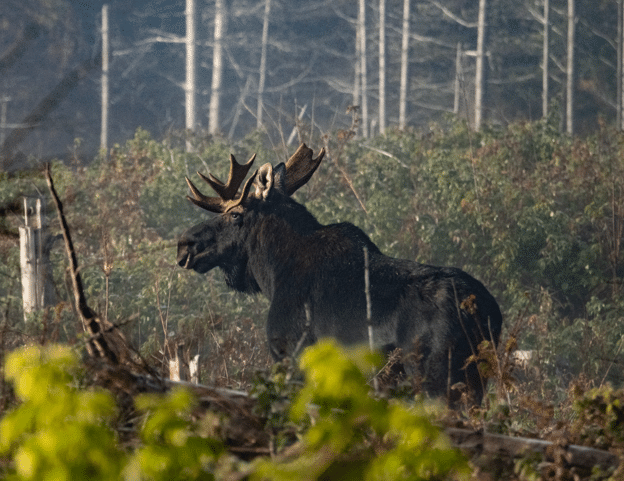
Why It Matters: New Hampshire’s moose hunt is a prime example of the North American Model of Wildlife Conservation in action. Through limited permits (only 33 in 2026), science-based management, biological monitoring, and hunter participation, the state provides a sustainable hunting opportunity while generating valuable information about the health of the moose population and supporting rural economies.
HIGHLIGHTS
- New Hampshire’s moose hunt is carefully regulated using science-based wildlife management. The hunt will take place October 17 – 25, 2026.
- During the 2026 Moose Lottery, 33 tag winners were selected from 5,914 applicants.
- Harvested moose provide valuable biological data to New Hampshire Fish and Game.
- Hunters contribute to conservation and local economies through their participation.
- The hunt demonstrates how regulated hunting can be part of successful wildlife conservation.
For the fortunate 33 hunters who have drawn a New Hampshire moose permit, the hunt is much more than nine days in the woods. It is the culmination of years of conservation, wildlife management, and preparation. It is also an excellent example of the North American Model of Wildlife Conservation in action. New Hampshire’s moose hunt is carefully regulated. Permit numbers are limited, seasons are restricted, and wildlife managers use biological information to guide decisions about harvest. When conditions change, management can change with them. That is how responsible wildlife management is supposed to work.
Importantly, hunters are not simply beneficiaries of this system, they are participants in it. When a hunter successfully harvests a moose, New Hampshire Fish and Game biologists collect important biological information, including data on age, sex, weight, antler development, and other indicators of herd health. That information helps wildlife professionals monitor the population and make informed management decisions. The hunter becomes part of the data.
New Hampshire’s moose hunt also demonstrates how conservation success can create sustainable hunting opportunities. Moose were once scarce enough that New Hampshire closed the season entirely in 1901. As populations recovered, careful management eventually allowed the state to establish a regulated moose hunt in 1988. A regulated hunting season is not the opposite of conservation, under the North American Model, it is one of the results of successful conservation. The benefits extend beyond wildlife management. Moose hunters travel to New Hampshire’s north country, spending money on fuel, food, lodging, equipment, guides, and other local services. For rural communities, hunting is an important component of the outdoor economy.
Of course, maintaining this opportunity requires continued vigilance. New Hampshire’s moose face challenges, including winter ticks. With shorter winters and less snowpack, winter ticks can complete their life cycle and collect in mass, waiting for a moose specifically, to brush up against the vegetation they are questing from and invade the moose. With high densities of moose on the landscape in certain wildlife management units these winter ticks can continue to complete their life cycles over and over again, especially when snow amounts are decreasing. Hunters play a role in harvesting a prescribed number of moose to help moose density in certain wildlife management units to increase the health of the state’s moose while attempting to knock down winter tick exposure. Hunting is a tool for keeping moose populations in check. As such sportsmen and women, we should support the professionals responsible for managing this resource and ensure that decisions remain grounded in sound science. The New Hampshire moose hunt represents something worth protecting, healthy wildlife, healthy habitat, hunting opportunity, and the outdoor traditions that connect people to the land.
The moose hunt is also special, via the Dream Hunt permit, to terminally ill children. In 2008 Congressional Sportsmen’s Foundation championed legislation that allows the New Hampshire Fish & Game to issue a special permit outside of the lottery to a terminally ill child. This past weekend the 2026 recipient harvested a 963 lbs. Bull boasting a 54.5 inch spread and 19 points.
To ensure that wildlife populations continue to be managed sustainably, and that the general public continues to benefit from the immense contributions made by hunters and anglers, it is critical that policymakers continually work with the sportsmen’s community and professional wildlife managers to maintain scientific management of our wildlife resources.
The moose hunt isn’t just an opportunity protected by conservation policy; it is an opportunity that helps demonstrate why conservation policy matters.