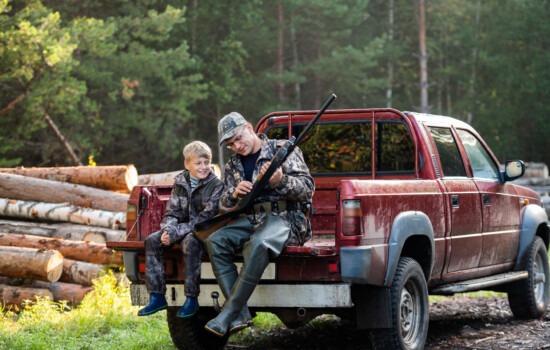
Why It Matters: Bringing hunter safety education classes into schools offers kids a chance to learn the fundamentals needed to safely participate and enjoy time outdoors in a controlled, safe, and familiar environment. The experiences that they gain can encourage them to become annual hunting and fishing license holders, where they will join in funding conservation for years to come. Additionally, protecting the private information of license holders gives both new and old hunting and fishing license holders a greater sense of security while they enjoy our shared time-honored traditions.
Highlights:
- On March 23, Louisiana Legislative Sportsmen’s Caucus (Caucus) Member Representative Paul Sawyer introduced HB 1130, which requires public school governing authorities to offer a hunter education course to students in grades 5-12.
- Also on March 23, Caucus Co-Chair and NASC Executive Council Member Representative Jerome Zeringue introduced HB 1177, which would protect the private biographical information of license holders who participate in lotteries conducted by the Louisiana Department of Wildlife and Fisheries.
- The Congressional Sportsmen’s Foundation (CSF) spearheaded the introduction of both pieces of legislation, and they have now been assigned to their first committee stops.
Louisiana is known as the “Sportsman’s Paradise” for good reason. From great duck hunting to world class sportfishing along the coast, there is no shortage of opportunities for sportsmen and women to get afield and on the water in Louisiana. The Louisiana Legislative Sportsmen’s Caucus recognizes the value that outdoor recreation brings to Louisiana and fights every year to protect, advance, and promote the Sportsman’s Paradise.
Exposing young people to the fundamentals of our time-honored traditions is essential in recruiting the next generation of hunters. Having them build an appreciation for our favorite pastimes during a critical developmental period in their lives will encourage them to more fully understand the importance of hunting in wildlife management.
HB 1130 not only requires that public schools offer hunter education in grades 5-12, but also that the State Board of Elementary and Secondary Education consults with the LDWF to implement proper courses. By allowing schools to offer courses in hunting safety education, students will receive the knowledge and experience needed to participate and to continue upholding Louisiana’s moniker as the Sportsman’s Paradise. Upon successful completion of the course, students will be well-equipped to get outdoors and participate in our time-honored traditions, which will hopefully spark a passion that will carry with them for the rest of their lives.
If the spark is lit, they could be further incentivized to continue their participation knowing that their personal information is protected if they decide to participate in lottery draw hunts conducted by the LDWF.
When applying for a license, whether through a lottery system or otherwise, individuals must provide accurate private biographical information. These individuals often believe that their information will only be seen by the receiving fish and game department. However, many states require this information to be published and/or open to the public upon request, resulting in a substantial lack of privacy protection for sportsmen and women. Currently, Louisiana lacks a safeguard for this sensitive information, which HB 1177 intends to correct.
CSF would like to thank Representative Sawyer and Representative Zeringue for their leadership in advancing both HB 1130 and HB 1177, and we will continue to support both efforts as they move through the legislative process.
Related Policy