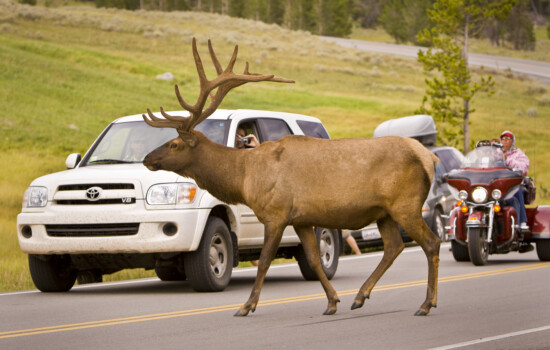
Why It Matters: The fundamental necessities for wildlife to persist are food, shelter, and water. Lack of access to any one of these needs impacts individual animal survival and potentially the persistence of entire populations of wildlife. Ensuring wildlife can reach these needs is a core component of habitat connectivity. Unfortunately, habitat connectivity is compromised in many places throughout our country. Habitat fragmentation is caused by roads, energy development, housing, fencing, and other modifications that can, and often do, disrupt animal movement and ultimately the overall sustainability of many fisheries and game and non-game species in New Hampshire.
Highlights:
- On July 15, 2026, Governors Sportsmen’s Caucus member Governor Kelly Ayotte signed Senate Bill 592 (SB 592) into law as Chapter 337.
- The bill enables regional, conservation, and energy resource planning for habitat strongholds and wildlife corridors.
- SB 592 also creates a commission to study transferring ownership of the Winnipesaukee River Basin program to an alternative authority and creates the position of Director of the Winnipesaukee River Basin program within the Department of Environmental Services.
Last month, Governor Kelly Ayotte signed Senate Bill 592 (SB 592) into law, as Chapter 337. The goal here is to support biodiversity and ecosystem health while addressing energy needs. Chapter 337 addresses the need for regional conservation and energy resource development planning that includes planning for habitat strongholds and wildlife corridors, integrating conservation goals with energy resource considerations.
The Winnipesaukee River Basin Program (WRBP) is a state-owned sewer system operated by the New Hampshire Department of Environmental Services (NHDES) for the towns of Center Harbor, Moultonborough, Gilford, Meredith, Laconia, Belmont, Sanbornton, Northfield, Tilton, and Franklin. The program was established to address severe water quality issues in the Lake Winnipesaukee and Lake Winnisquam watersheds, including fish kills, algae blooms, bacterial contamination, and beach closures.
The potential transfer of this state-owned program to local ownership will allow local conservation commissions to include habitat strongholds and wildlife corridors in their plans supporting broader environmental goals for the basin. The definitions are important and establish standards for planning. In the New Hampshire Fish and Game Statutes, a habitat stronghold is defined as a high-quality habitat that supports the ability of wildlife to be more resilient to increasing pressures on species due to climate change and land development. Wildlife corridors are defined as a habitat linkage that joins 2 or more areas of wildlife habitat, allowing for fish passage or the movement of wildlife from one area to another. With these standards in mind, the established commission will have to take these into consideration when deciding on the future of the WRBP and future development.
While this bill addresses a very specific part of the state, the overarching goals and purpose will have effects throughout. Wildlife corridors and wildlife movement may, on the face of it, appear to be a “western” issue given the spotlight of the successful wildlife crossing projects and corridor policy from the Department of the Interior in recent years, but rest assured, wildlife in the east requires the same attention, albeit on a geographically smaller and more fragmented scale. Migration is essential for the survival of countless wildlife populations, supporting breeding, feeding, and adaptation. Species depend on connected landscapes to adapt to environmental change. Without permeable landscapes and movement corridors, game species like white tail deer and black bear are susceptible to human/ wildlife conflicts, especially during breeding and wintering seasons. Non-game species like New Hampshire’s many amphibian species migrate annually to vernal pools to reproduce which supports many bird species, reptiles, and mammals on the landscape That is also true of many of New Hampshire’s fisheries species, as critical water ways for river herring (alewives) travel inland supporting the striped bass migration, or cold freshwater rivers and streams that support New Hampshire’s native trout fisheries.
The New Hampshire Legislative Sportsmen’s Caucus played a strong role in the support and sponsorship of SB 592. Senate Co-Chair Kevin Avard was among the sponsors. Wildlife Corridors is a top priority of the Congressional Sportsmen’s Foundation (CSF) and our work at the state and federal levels. Presently, CSF continues to work with legislators on the bipartisan, WIldlife Movement Through Partnership Act, as well as our efforts to make the Wildlife Crossings Pilot Program a permanent effort.
Related Policy