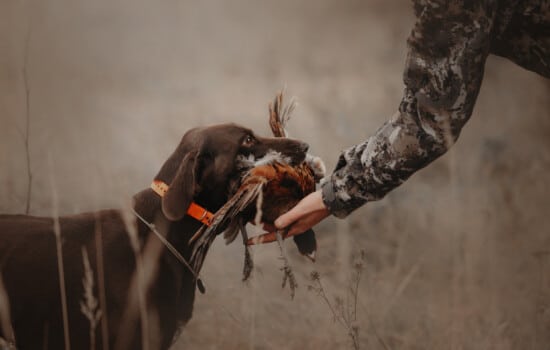
Why It Matters: Hunting takes many forms and often includes a diverse toolkit at a hunter’s disposal. One tool utilized by hunters for a wide range of pursuits is dogs. Whether it is using hounds to pursue deer, bear, mountain lions and more, or a hard-charging retriever for picking up waterfowl, or pointing and flushing dogs for a wide array of upland game, dogs play a huge role in the lives of many hunters. It is important to recognize this long-standing tradition and address any attempt at limiting legal pursuits that involve the use of sporting dogs.
Highlights:
- Sporting dogs often are considered part of the family both at home and in the field with owners investing a significant amount of time and money in creating an efficient hunting partner.
- Lawmakers should keep sporting dogs in mind when drafting all kinds of legislation relating to dogs, where even well-intentioned policy proposals can negatively impact our abilities to hunt with dogs.
- During the 2026 legislative session, the Congressional Sportsmen’s Foundation (CSF) engaged in multiple bills that would have limited a dog’s exposure to relatively normal temperature ranges.
Summer can present both a challenge and an opportunity for sporting dog owners. With the dog days of summer in full swing and hunting seasons still weeks away, dog owners are constantly trying to find ways to keep their four-legged companions active and tuned up for the approaching hunting seasons.
The biggest restriction that many hunters face when it comes to training their dog in the summer months is temperature, especially here in the South. If you can feel the heat and humidity blast you when opening the front door, so can your dog. No different than you do for yourself, you must adapt and find ways to get your dog outside, even if it is only for a brief training session.
The proper response to heat when it comes to exercising and training your high-drive dog is to use caution: be content with very brief training sessions, provide plenty of water, have a place for your dog to cool down like a well-vented crate or air-conditioned vehicle or home, and the list goes on.
Although there are many ways to work, train, and hunt with sporting dogs in hot (or cold) climates, there are often legislative attempts to arbitrarily restrict dogs’ exposure to what many sporting dog owners would consider normal temperature ranges for their respective dog breed. For example, CSF worked with partners to defeat New York Senate Bill 6380, which would have prohibited the tethering of dogs in “dangerous weather conditions” which the bill defined as outside of the range of 80 degrees and 35 degrees Fahrenheit, among other restrictions. While the intention of the bill may be well-meaning, broad legislative attempts to address bad actors in the dog world will almost always have an unintended negative consequence on sporting dog owners. It goes without explanation the long list of reasons why limiting a dog’s exposure to a “safe” temperature range would limit its ability to hunt. In most of the United States, hunters would be hard-pressed to find a day in waterfowl season above 35 degrees or a summer training day below 80. By not allowing these dogs to be safely tethered and exposed to the range of temperatures they would be working in, it is only setting the dog up for failure and a potentially dangerous situation afield.
Finally, it is safe to say that sporting dog owners are among the most disciplined and respected owners in the dog ownership world and go to great lengths to ensure their companions receive nothing short of the best care and training. Attempts to regulate bad actors often have overreaching consequences for law-abiding hunters, and in most instances, existing state law already provides a means to prosecute and punish unethical dog owners and breeders without requiring change.
CSF will continue to work closely alongside our close partners in the sporting dog space as we all look forward to the fall hunting seasons and into next year’s legislative sessions.
Related Policy