
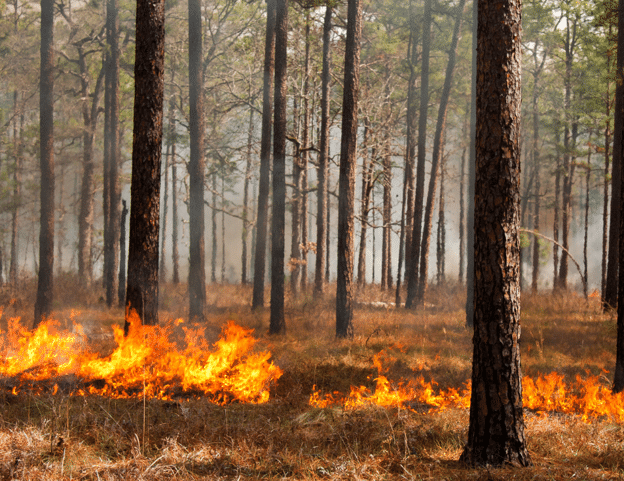
Why It Matters: As fire season continues across much of North America, actions designed to mitigate the destruction wildfires cause continue to be a timely and important topic in Washington, D.C. As one of the most efficient and cost-effective tools for reducing both the frequency and severity of wildfires, support for prescribed burning continues to grow, representing an opportunity to advance policy solutions that the sporting-conservation community has been championing for years. As calls for the responsible use of prescribed fire continue, legislative and regulatory updates to eliminate barriers to its use will continue to be a top priority.
Highlights:
- Prescribed fire is an important habitat management tool that can reduce the frequency and severity of wildfires while improving habitat quality for many species of wildlife.
- Despite the many benefits associated with prescribed fire, legislative and regulatory barriers have impaired the ability of practitioners to use this important management practice.
- The recently introduced Wildfire Emissions Prevention Act of 2026 (WEPA) seeks to eliminate some of these barriers. By creating exceptions for pollutants caused by prescribed fire from regulatory decisions associated with the Clean Air Act, WEPA will allow prescribed burning to continue to play a role in mitigating wildfires and the tremendous pollutants that they can release.
Last week, a bipartisan coalition of Senate Committee on Environment & Public Works and Congressional Sportsmen’s Caucus (CSC) Members, including CSC Chairman Senator Boozman and Senators Capito, Curtis, Kelly, Merkley, and Padilla, introduced the Wildfire Emissions Prevention Act of 2026 (WEPA). Rooted in an understanding of the critical role that prescribed fire plays in limiting the frequency and severity of wildfires while promoting quality wildlife habitat, WEPA focuses on updates to the Clean Air Act that would exempt the air pollutants resulting from prescribed fire from regulatory decisions under the Clean Air Act.
Prescribed fire does result in the release of smoke and other pollutants into the atmosphere. However, the low intensity and slow rate of spread common among responsibly applied prescribed fires result in far less smoke and other pollutants than the devastating wildfires that we continue to see in many areas across North America. Alternatively, and as many in the Eastern United States can attest following weeks of wildfires in Canada, large scale wildfires, often occurring in unburned and unmanaged forests, result in the release of tremendous amounts of greenhouse gasses and other air pollutants that can cause impacts across wide regions. WEPA recognizes the role that prescribed fires play in lowering wildfire risks and significantly reducing, if not preventing, wildfire-associated emissions.
The Congressional Sportsmen’s Foundation (CSF), along with many partners, has expressed support for WEPA as it begins its journey through the legislative process. CSF is a strong proponent of policies and regulations that promote the implementation of prescribed fire and the associated benefits for wildlife, including many popular game species. Recent CSF priorities related to prescribed fire include updates to state liability standards, increased opportunities to implement prescribed fire and other active forest management actions through the Fix Our Forests Act, and the availability of information from state and federal agencies designed to promote the benefits of responsibly implemented prescribed fire in appropriate ecosystems across the country.